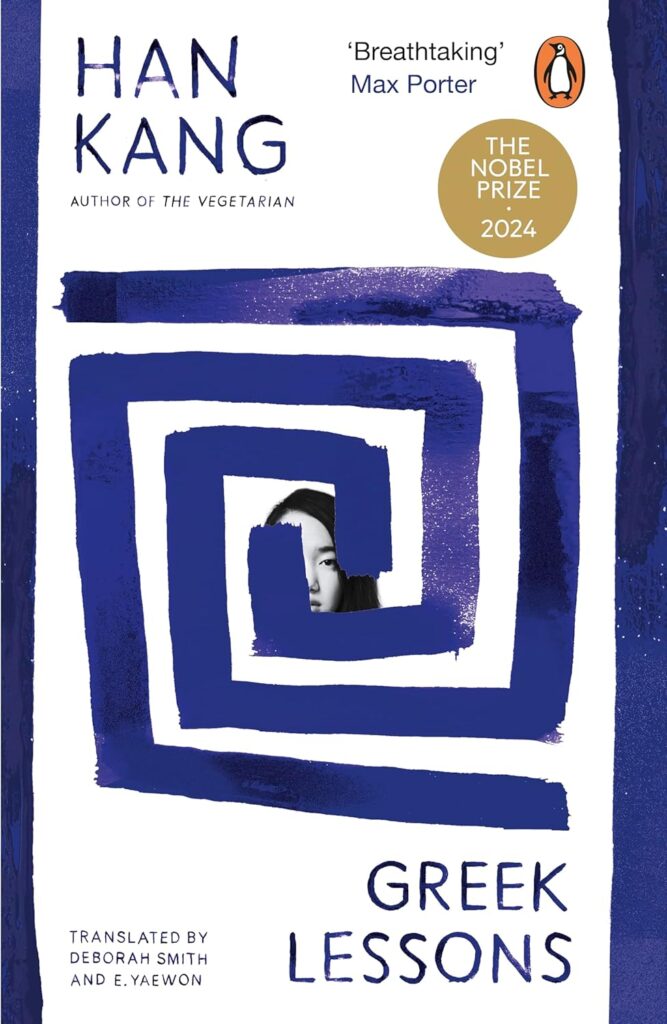
Book: Greek Lessons
Author: Han Kang
Translated by: Deborah Smith and Emily Yae Won
Form: Literary fiction / translated fiction
Subject: A woman losing her voice and a man losing his sight, brought together through language, silence, and private grief
Main themes: silence, language, loss, grief, memory, sight, speech, human connection, isolation, trauma, and the limits of expression
Best for: Readers interested in quiet literary fiction, Korean literature, translated novels, reflective writing, and books that explore language, silence, grief, and fragile human relationships.
About - Greek Lessons
Greek Lessons is a quiet, unsettling novel by Han Kang, where the author explores silence, language, and the fragile ways in which human beings attempt to reach one another. At its core, the book asks a deceptively simple question: what happens when language begins to disappear? And what remains when words fail, but the need to be understood does not?
The novel brings together two people whose lives are shaped by loss—one losing her voice, the other losing his sight. The woman, once articulate, finds herself unable to speak, retreating into a silence that is not chosen but imposed. She enrolls in a Greek language class, not to communicate, but perhaps to remember what language once meant to her. The man teaching the class is slowly going blind, watching the world dissolve into darkness even as he continues to describe it to others.
Han Kang does not rush their meeting, nor does she dramatize it unnecessarily. Instead, she lets their silences speak. Their connection grows not through confessions or grand gestures, but through shared absence—of voice, of vision, of certainty. The novel unfolds gently, almost hesitantly, as though aware that too much force might break what is already fragile.
What is striking about Greek Lessons is how deeply it meditates on language—not as a tool for expression, but as a burden. Words, the book suggests, are not always liberating. Sometimes they wound. Sometimes they fail. And sometimes, silence becomes the only possible response to grief, trauma, and memory. The woman’s muteness is not merely physical; it is shaped by personal loss, by the violence of expectation, and by a world that demands articulation even when none is possible.
Han Kang’s prose is restrained, almost ascetic. She does not explain emotions; she lets them surface in fragments—through gestures, thoughts, and fleeting memories. The novel moves between the present and the past, revealing how both characters arrived at their current state of erasure. Loss here is cumulative, quiet, and persistent. It does not announce itself; it settles in.
There is also something deeply political in this silence, though the novel never states it explicitly. In a world obsessed with speech, visibility, and constant self-expression, Greek Lessons asks us to sit with those who cannot—or will not—participate in that noise. It questions whether understanding truly requires words, or whether we have simply forgotten how to listen.
Some readers may find the novel sparse, even slow. There is no conventional plot to propel the story forward, no neat resolution waiting at the end. But that is precisely the point. This is a book that resists urgency. It demands patience, attentiveness, and a willingness to dwell in discomfort.
Greek Lessons is not a novel you rush through; it is one you inhabit briefly, quietly. It reminds us that not all connections are loud, not all losses visible, and not all understanding verbal. In reading it, one is left with the unsettling realization that language—something we rely on so heavily—may be far more fragile than we assume. And when it breaks, what we are left with is not emptiness, but a different, more difficult kind of truth.
About the author
Han Kang was born in Gwangju in 1970. Since the age of ten, She grew up in Suyuri, Seoul after her family moved there. She studied Korean literature at Yonsei University. She made her literary debut as a poet by publishing five poems, including “Winter in Seoul”, in the winter issue of Munhak-gwa-sahoe (Literature and Society) in 1993.
She began her career as a novelist the next year by winning the 1994 Seoul Shinmun Spring Literary Contest with “Red Anchor”. She published her first short story collection entitled Yeosu (Munji Publishing Company) in 1995. She participated in the University of Iowa International Writing Program for three months in 1998 with support from the Arts Council Korea.
Related Books
About the reviewer
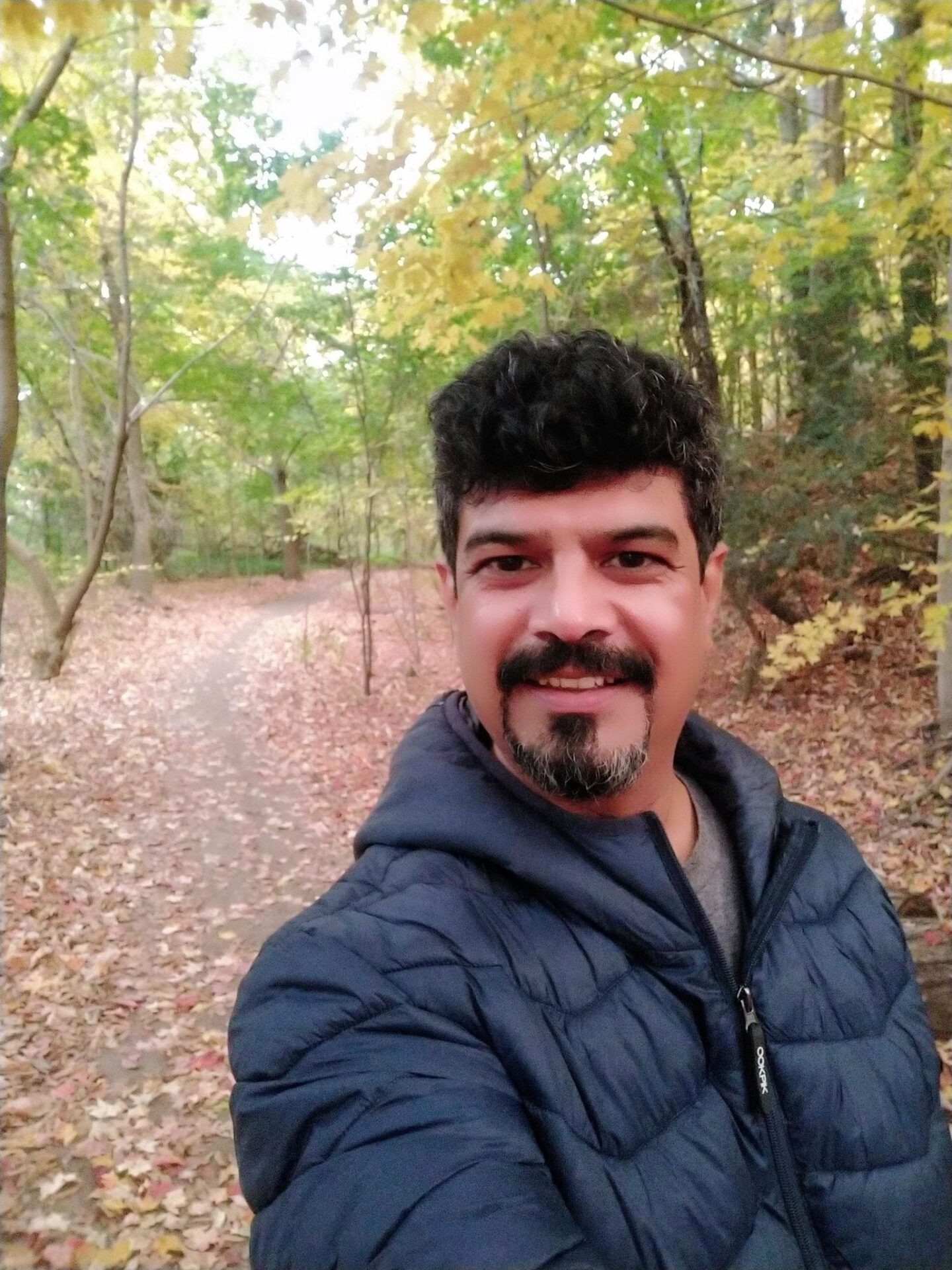
Manoj Payal
Manoj is an avid reader and a writer in progress, with interests spanning literature, history, politics, and the social sciences. His writing across book reviews, essays, articles, and poetry—explores ideas, society, and the human experience.He has spent over two decades working in the IT industry, a background that informs his analytical approach to reading and writing.