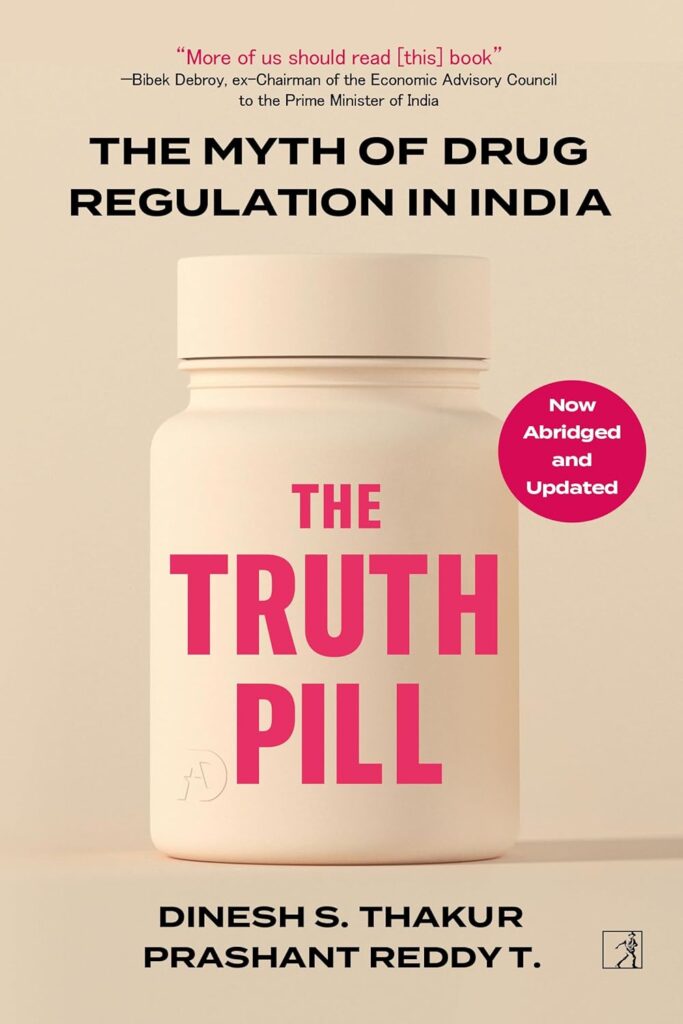
The Truth Pill co-authored by Dinesh S. Thakur with Prashant Reddy T. This book asks an urgent question: Can we truly trust the medicines we take? At a time when health and safety are talked about often but understood less, this book stands out as a deeply thoughtful and eye-opening investigation into how drugs are regulated in India and how that system affects millions of lives.
Thakur is not an outsider looking in. He worked inside the pharmaceutical world and later became a whistleblower. His experience gives this book a rare perspective, one that is both personal and deeply analytical. Reddy, a lawyer, adds a clear understanding of how the law approaches drug safety and enforcement. Together, they guide the reader through a subject that is technical by nature but immensely important for every citizen.
The book does not begin with statistics or long explanations. Instead, it starts with people, real stories of children harmed by contaminated medicines. These early chapters are sobering reminders that the issues at the heart of this book are not abstract. They affect families, daily life, and trust in systems we rely on without question.
What follows is a thorough review of India’s drug regulation framework. The authors explain how laws created many decades ago — in some cases more than 80 years old — still govern today’s modern pharmaceutical industry. These laws were once adequate, but they have not evolved to meet the scale, complexity, or scientific challenges of current times. The result, the authors show, is a system where inspections are infrequent, quality checks are weak, and enforcement often lacks teeth.
One of the most compelling parts of The Truth Pill is how it balances detail with clarity. Thakur and Reddy use official reports, government data, court records, and open-government responses to support their claims. Yet they never get lost in numbers or legal jargons. Their focus always returns to the broader question: What does this mean for the everyday person who trusts a medicine to heal?
The book also explores the uneven treatment of different medical traditions. Allopathic drugs, which are e most widely used — face strict rules, yet enforcement is inconsistent. Meanwhile, traditional medicine systems often operate with far less regulatory scrutiny. This contrast raises important questions about safety, perception, and how society values different approaches to health.
It is worth noting that The Truth Pill does not offer easy solutions. It clearly identifies problems but also highlights the challenges in fixing them. The authors argue for stronger enforcement, updated laws, transparent regulatory processes, and accountability at every level. Their call is not revolutionary, but it is urgent: safety cannot be taken for granted, and trust must be earned.
The writing throughout is steady and accessible. There are moments that require attention, especially when the book discusses legal procedures or regulatory structures, but these are always explained in straightforward language. The voices of Thakur and Reddy are measured, not alarmist. They do not sensationalize the issue; they document it with care and persistence.
This book may feel slow at times, especially to readers who prefer narrative flair over factual grounding. But it is precisely this solid grounding that makes The Truth Pill valuable. It is a book that encourages pause, reflection, and deeper understanding — not just reaction.
In the end, The Truth Pill is more than a critique of regulatory systems. It is a call to awareness and responsibility. It reminds readers that health systems are only as strong as the laws, institutions, and practices that support them. Most importantly, it insists that public safety should always take precedence over profit or convenience.
For anyone who takes medicine, cares about public health, or seeks clearer answers about how our systems work, this book is an essential read. It does not just inform — it equips readers to ask better questions and demand better accountability. That alone makes it a timely and meaningful book in today’s world.