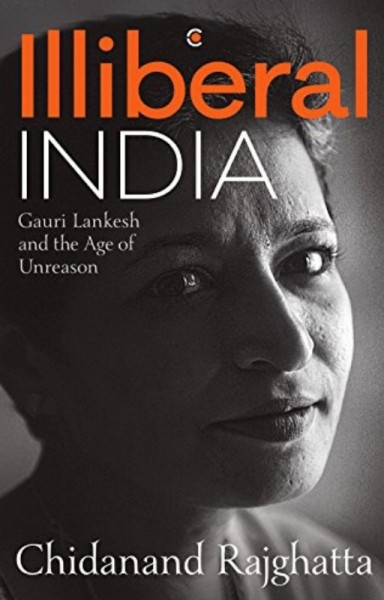
Illiberal India: Gauri Lankesh and the Age of Unreason by Chidanand Rajghatta is both a personal tribute to journalist Gauri Lankesh and a commentary on the changing political and social landscape of India. Rajghatta, her former husband and lifelong friend, looks at Gauri’s personal and professional life while also tracing the politics of Karnataka, the rise of communal tensions, and the growing climate of intolerance. The result is a book that works as both a portrait of Gauri Lankesh and an introduction to some of the political debates that shaped contemporary India.
Book: Illiberal India: Gauri Lankesh and the Age of Unreason
Author: Chidanand Rajghatta
Genre: Biography / Political Non-fiction
Published: 2018
Publisher: Westland
Pages: 216
Focus: Gauri Lankesh, Karnataka politics, communalism, political intolerance and contemporary India
Best for: Readers interested in Indian politics, journalism, Gauri Lankesh and political biography
Why I Picked Illiberal India
I had been seeing this book in my Kindle recommendations for quite some time. Around the first week of September, I read an article about Gauri Lankesh on her third death anniversary, which falls on 5 September. I had always wanted to know more about her and the work she did, and while reading about her I came across this book again. When I discovered that it had been written by her former husband and lifelong friend, Chidanand Rajghatta, I became even more interested. I assumed that someone who had known Gauri so closely would be able to offer an insight into both her personal life and her work, and that finally made me pick up the book.
About Illiberal India
Illiberal India is a tribute to Gauri Lankesh, but it is also much more than a biography. Rajghatta brings together Gauri’s personal and professional life with the broader political and social history of India, particularly Karnataka. He writes about her childhood and her relationship with her father, P. Lankesh, the respected writer, filmmaker and founder of Lankesh Patrike. He also reflects on his own courtship, marriage and eventual divorce from Gauri, and on how the two remained close friends afterwards.
Running alongside Gauri’s story is another narrative—the changing political climate of India. The book discusses issues such as Tipu Jayanti, the Lingayat debate, so-called love jihad, Naxalism, communal politics and the rise of political intolerance. Gauri herself had become an outspoken critic of communal forces and was involved in causes including Dalit and minority rights and the rehabilitation of Naxals. Rajghatta places her activism within this wider political context rather than presenting her death in isolation.
The book also draws attention to the murders of rationalists Narendra Dabholkar, Govind Pansare and M.M. Kalburgi, whose killings preceded Gauri Lankesh’s assassination in 2017. In doing so, Rajghatta examines what he sees as a broader climate of extremism and intolerance.
One thing I appreciated is that the author does not restrict himself to one political party or one form of extremism. He is critical of both the Congress and the BJP and treats extremism—whether from the Left or Right, Hindu or Islamic—with similar disdain. At the same time, his personal connection with Gauri gives the book an intimacy that a conventional political biography might not have.
I would then retain your quotation from the book exactly where it currently appears. It fits naturally after this discussion.
Who Should Read Illiberal India
Illiberal India will appeal most to readers interested in Indian politics, journalism, social issues and the life of Gauri Lankesh. It is particularly useful for readers who want a broader understanding of Karnataka politics and the social and political debates that surrounded Gauri’s work. The language is generally easy and accessible, but the narrative often moves back and forth between personal memories, political events and different periods of time. Because of this, readers unfamiliar with Karnataka politics may occasionally find it difficult to keep track of some references.
If political and social issues interest you, however, the book offers considerable insight into both Gauri Lankesh as a person and the larger political environment in which she lived and worked. Readers looking purely for a straightforward biography may find the political commentary extensive, but those interested in the intersection of journalism, politics and personal history are likely to get much more from it.
About the author
CHIDANAND RAJGHATTA is the author of The Horse That Flew: How India’sSilicon Gurus Spread their Wings, and IlliberalIndia: Gauri Lankesh and the Age of Unreason. He is foreign editor and U.S.bureau chief at theTimes ofIndia and one of the longestserving foreign correspondents in Washington, DC. In earlier roles, Rajghattahas worked with India’s leading brands, including The Indian Express, where hebegan his journalism career,TheTelegraph of Kolkata, India Today, and TheSunday Times of India. Rajghattalives with his wife Dr Mary Breeding and their three children in Maryland, USA.
About the reviewer

Manoj Payal
Manoj is an avid reader and a writer in progress, with interests spanning literature, history, politics, and the social sciences. His writing across book reviews, essays, articles, and poetry—explores ideas, society, and the human experience.He has spent over two decades working in the IT industry, a background that informs his analytical approach to reading and writing.