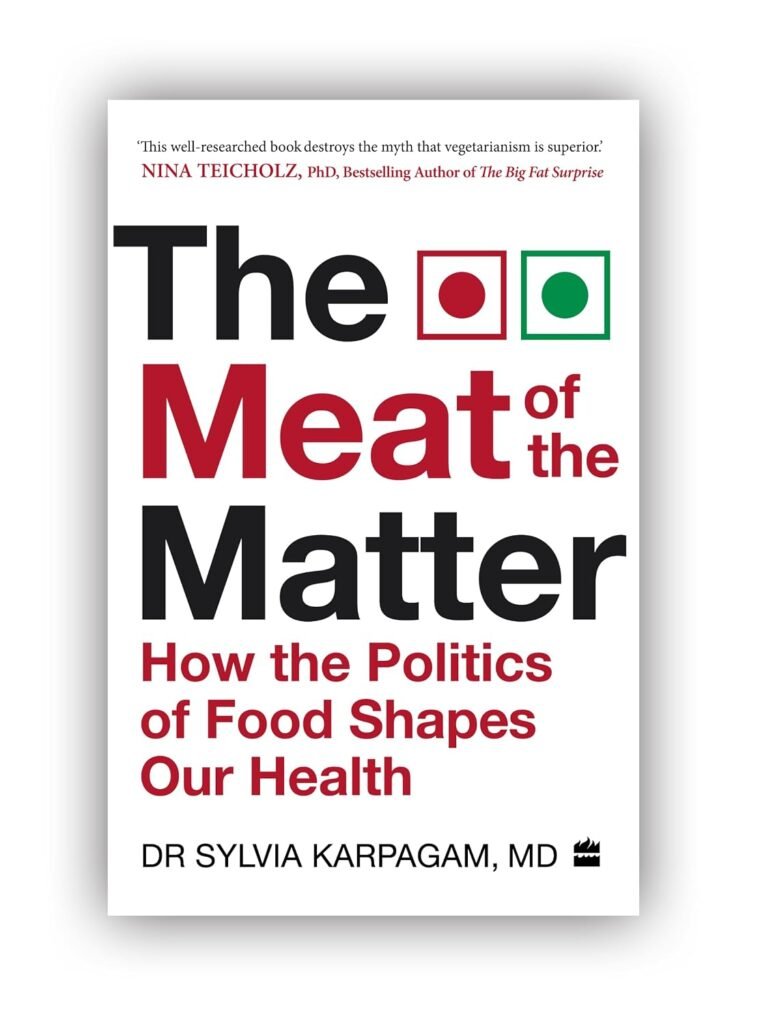
The Meat of the Matter: How the Politics of Food Shapes Our Health by Dr Sylvia Karpagam explores our food habits and the social, economic and cultural factors that influence what we eat. It examines how religion, caste, politics and ideas of purity have come to influence what is often considered a personal choice, and how these influences, in turn, affect the health of individuals and the nation. The book begins by establishing the relationship between food, the human body and physical and mental development. It then examines the essential components of a healthy diet, challenges common misconceptions about nutrition, and questions several long-held beliefs surrounding vegetarianism and meat consumption. More than a book about food, it is an exploration of how social hierarchies and political ideologies shape our plates, often at the cost of nutrition and public health.
Book: The Meat of the Matter: How the Politics of Food Shapes Our Health
Author: Dr Sylvia Karpagam
Publisher: HarperCollins
Year of publication: 2026
Genre: Non-fiction / Public health / Nutrition
Key themes: Food and nutrition, health, caste, religion, politics, food choices, social inequality and public health
Why I Picked - The Meat of the Matter
I found the topic interesting, especially in the wake of recent debates and diktats surrounding food choices. Most of these debates tend to focus on religion and ideas of purity rather than the nutritional value of food. In recent years, we have also seen concerted efforts by so-called cultural groups to dictate what people should or should not eat. Arguments about healthy and nutritious food are often based on opinions, beliefs and preconceived notions rather than informed, evidence-based reasoning. I wanted to gain a better understanding of our food habits and how they affect the overall health of a nation. This led me to pick up The Meat of the Matter.
About - The Meat of the matter
The Meat of the Matter is a research-based book that offers a basic understanding of the relationship between the human body and the nutrients we obtain from food. It breaks down the various components of our diet, such as proteins, fats, vitamins and minerals, and explains their importance in human growth and development. It also highlights the role these nutrients play in ensuring that our bodies function optimally, both physically and mentally.
One of the interesting aspects of the book is the author’s classification of food into plant-source foods (PSFs) and animal-source foods (ASFs), rather than the conventional categories of vegetarian and non-vegetarian food. After reading the book, I found this distinction more logical, as it classifies food according to its source rather than cultural or religious beliefs. The conventional practice of categorizing some animal-derived foods, such as milk, as vegetarian while placing others, such as meat, in the non-vegetarian category reflects the influence of these beliefs on how we perceive food.
The book challenges several common myths surrounding food and food habits. The concept of purity attached to food is particularly interesting in the Indian context, where ideas of pure and impure food are closely intertwined with the deeply entrenched caste system. It makes readers question why certain foods are considered pure, while others are regarded as impure or less acceptable.
Vegetarianism is often associated with qualities such as kindness, compassion and concern for animals. While these may be personal motivations for choosing a particular diet, associating food habits with a person’s moral character is problematic. What someone eats does not necessarily determine how compassionate or considerate they are. Similarly, the taboo surrounding beef consumption in several parts of India, and the dehumanization of those who consume it, appear to be driven more by religious and political considerations than by any consistent concern for animal welfare.
The political interference in the mid-day meal programme in government schools is another case in point. Here, the focus often shifts from the nutritional needs of children to religious and ideological considerations. Eggs, an important and easily available source of protein and other nutrients, have been removed from school meals in several states, with plant-source foods sometimes offered as alternatives. While plant-based foods are an essential part of a healthy diet, the nutritional value of any replacement needs to be carefully considered. In a country where undernutrition and child malnutrition remain serious concerns, decisions about school meals should be guided primarily by nutritional requirements and scientific evidence.
The mid-day meal programme was an important initiative to improve children’s nutrition and encourage school attendance, particularly among children from economically disadvantaged backgrounds. However, when decisions about what children should eat are influenced by political and religious considerations rather than their nutritional needs, the very purpose of such programmes risks being undermined.
Another important issue the book raises is the corporatisation of the food distribution system. There is a widespread perception that India is predominantly a vegetarian country, despite the considerable diversity in the food habits of its population. Large corporations often position their products as plant-based to appeal to consumers and capture a larger share of the Indian market. These products are frequently promoted as healthier, more nutritious and more environmentally friendly alternatives to conventional animal-source foods.
With growing concerns about climate change and animal welfare, plant-based products and lab-grown alternatives are also being marketed as more sustainable choices. However, claims about health, nutrition and environmental benefits need to be examined critically rather than accepted at face value. The nutritional value of a product depends on its composition, while its environmental impact depends on several factors, including how it is produced and distributed. The book encourages readers to look beyond marketing narratives and question the assumptions underlying these claims.
Overall, The Meat of the Matter challenges several widely held beliefs about food and food habits. It encourages readers to look beyond religious, cultural and political narratives and approach nutrition through research and evidence. More importantly, it makes a case for a healthy, nutritious and balanced diet, one that takes into account the nutritional needs of individuals rather than imposing dietary choices based on notions of purity or ideology.
Who Should Read - The Meat of the Matter
The Meat of the Matter will appeal to readers interested in nutrition, public health, food politics and the social factors that influence our everyday choices. It is particularly relevant to those who want to understand how religious beliefs, caste, cultural practices and economic inequalities shape food habits in India. Readers interested in social justice, public policy and the relationship between individual freedoms and collective well-being will also find much to reflect on.
About the author
Dr Sylvia Karpagam is an Indian public health doctor and researcher whose work focuses on nutrition, food security, health policy and social justice. She holds an MD in Community Medicine from St John’s Medical College, Bengaluru, and has spent more than two decades examining the relationship between public health, food systems and social inequalities. Through her research and writing, she has drawn attention to how caste, religion, economic conditions and government policies influence access to nutritious food. In The Meat of the Matter, she brings these concerns together to question prevailing assumptions about nutrition and examine the wider consequences of politicizing food choices.
Related Readings
About the reviewer

Manoj Payal
Manoj is an avid reader and a writer in progress, with interests spanning literature, history, politics, and the social sciences. His writing across book reviews, essays, articles, and poetry—explores ideas, society, and the human experience.He has spent over two decades working in the IT industry, a background that informs his analytical approach to reading and writing.