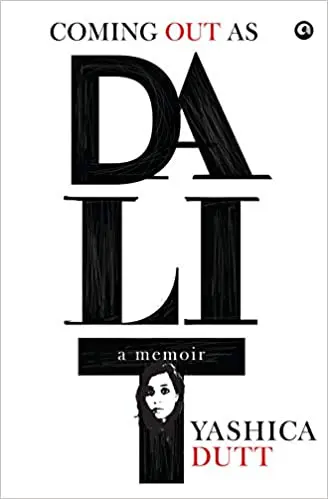
Coming Out as Dalit by Yashica Dutt is a personal and political memoir about caste, shame, identity, and assertion. The book traces Dutt’s journey from hiding her Dalit identity to publicly claiming it, while also opening up larger questions about caste discrimination, reservation, Ambedkar, Dalit movements, and the everyday burden of passing as upper caste. This review looks at why the book matters for readers who want to understand caste not only as a social system, but as lived experience.
Book: Coming Out as Dalit
Author: Yashica Dutt
Form: Memoir / caste studies / social commentary
Subject: Caste, identity, shame, and Dalit assertion in modern India
Main themes: caste discrimination, reservation, Dalit identity, Ambedkar, manual scavenging, education, privilege, and social mobility
Best for: Readers interested in caste, Dalit writing, memoirs, social justice, Indian society, and books by Indian women writers in English
Why i Picked - Coming Out as Dalit
Our understanding of caste and reservation is often shaped by incomplete information. We hear strong opinions about merit, reservation, caste identity, and Dalit assertion through television debates, newspapers, and now social media, but much of this discussion lacks depth and lived experience.
I picked up Coming Out as Dalit because I wanted to understand why someone would feel compelled to hide their Dalit identity, and what it means to finally claim it openly. The title itself made me curious, because “coming out” is not usually a phrase we associate with caste, yet the book shows why it becomes necessary in a society where caste continues to carry stigma.
What is "Coming Out as Dalit" About?
Coming Out as Dalit is Yashica Dutt’s personal memoir. The book begins from a moment of recognition: Dutt comes across a Facebook post about Rohith Vemula, the Dalit research scholar whose death forced many people to confront the loneliness, discrimination, and institutional hostility faced by Dalit students.
Reading Vemula’s letter makes Dutt look back at her own life and the many ways in which she had hidden her caste identity — in school, college, workplaces, and social circles. The book then traces her family background, education, career, and gradual understanding of caste, shame, privilege, and assertion.
What makes the book important is that it does not remain only a personal story. Alongside her own experiences, Dutt discusses the caste system, untouchability, manual scavenging, reservation, Dalit movements, and Ambedkar’s role in shaping modern anti-caste thought.
Caste, Shame, and Hiding Identity
One of the strongest parts of the memoir is the way it explains caste shame. Dutt writes about the fear of exclusion from upper-caste friends, classmates, and colleagues, and how that fear slowly teaches a person to hide parts of themselves. This is not only about one individual’s hesitation; it is about the pressure to assimilate into spaces where caste privilege is treated as normal.
The book also shows that education and employment do not automatically erase caste. Dutt’s family had access to education and government jobs, yet caste stigma remained present in everyday life. This makes the memoir useful for readers who assume that caste discrimination exists only in villages or only among the very poor.
Reservation, Ambedkar, and Dalit Assertion
The book also addresses reservation, a subject that is often discussed with anger but very little historical understanding. Dutt shows how arguments around merit are frequently shaped by caste privilege, and how reservation cannot be understood without looking at centuries of exclusion from education, land, dignity, and opportunity.
Her introduction to Ambedkar and Dalit movements becomes an important turning point in the book. It gives her language, history, and courage to understand her identity differently. The journey from hiding caste to claiming Dalit identity is therefore not only personal; it is also political.
Readers interested in similar books may also find this list of books that explore caste in India useful –10 Books To Understand Caste System In India
Writing Style
The book is written in simple and accessible English, which makes it easy to read without making the subject feel light. Since it is written in the first person, the memoir has an immediate and personal quality. At the same time, Dutt brings in research, history, and political context, which makes the book informative as well as reflective.
The writing works best when it connects personal memory with social reality. The reader is not only told that caste exists; one is made to understand how it enters classrooms, friendships, workplaces, language, surnames, confidence, and silence.
Who Should Read This Book?
This book is useful for readers who want to understand caste through lived experience rather than only through theory or political debate. It is especially important for those who believe caste discrimination no longer exists, or that reservation is only a question of merit.
Readers interested in caste, Dalit writing, memoirs, Ambedkar, Indian society, and books by Indian women writers in English will find this book particularly meaningful.
Our Verdict
Coming Out as Dalit is an honest and necessary memoir that helps readers understand what it means to live with caste stigma and what it means to reject that shame. Yashica Dutt’s personal journey becomes a way to look at a larger social reality that many people either ignore or misunderstand.
The book is important because it makes caste visible in everyday spaces — schools, colleges, offices, friendships, family histories, and public debates. It is a useful starting point for anyone who wants to understand caste not as an abstract system, but as something that shapes dignity, opportunity, identity, and belonging.
About the author
Yashica Dutt is a New York-based journalist who writes on gender, identity, and culture. She was previously a principal correspondent with Brunch and the Hindustan Times and is the founder of Documents of Dalit Discrimination.
Related Readings
About the reviewer
Manoj Payal
Manoj is an avid reader and a writer in progress, with interests spanning literature, history, politics, and the social sciences. His writing across book reviews, essays, articles, and poetry—explores ideas, society, and the human experience.He has spent over two decades working in the IT industry, a background that informs his analytical approach to reading and writing.