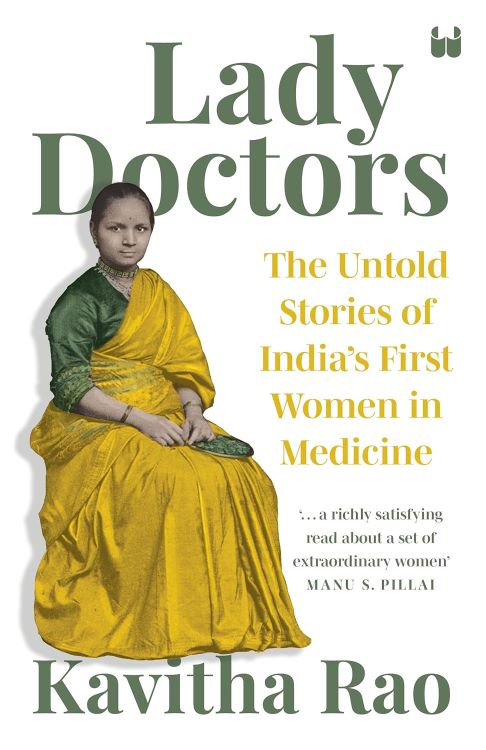
Lady Doctors by Kavitha Rao tells the stories of India’s first women in medicine and the difficult path they had to take in a deeply conservative society. The book looks at the women who challenged patriarchy, child marriage, social restrictions, and limited access to education to become doctors. This review looks at why their stories matter, not only as medical history, but as part of the larger history of women’s education, healthcare, and social reform in India.
Book: Lady Doctors: The Untold Stories of India’s First Women in Medicine
Author: Kavitha Rao
Form: History / biography / Indian non-fiction
Subject: India’s first women doctors and their struggle for education and recognition
Main themes: women in medicine, patriarchy, education, child marriage, social reform, healthcare access, gender discrimination, and forgotten histories
Best for: Readers interested in women’s history, medicine, Indian society, social reform, biographies, and books by Indian women writers in English
Why I Picked Lady Doctors
The title Lady Doctors: The Untold Stories of India’s First Women in Medicine immediately fascinated me. I was interested to know the stories of women who were pioneers in the field of medicine at a time when even the idea of a woman studying seriously was not easily accepted.
I expected the book to be a great treatise on the journey of becoming a doctor, and on the challenges and hardships the first lady doctors faced while trying to enter a profession that was almost entirely closed to women. I also wanted to understand what kind of courage it must have taken for these women to choose education, medicine, and public life when society expected them to remain within the home.
About Lady Doctors
As the title suggests, Lady Doctors is about the first women doctors of India and their journey towards becoming doctors. The book looks at the hardships, challenges, and resistance they faced from the conservative and patriarchal society of their time.
There are seven chapters in the book. One chapter gives readers a background of women doctors in the world, while the next six chapters are dedicated to six brilliant Indian women who became doctors despite many odds. Kavitha Rao gives this wider background to show how difficult it was for women to pursue studies at that time, not only in India but across the world.
The book also shares some interesting facts about how women in the past had to disguise themselves as men in order to study and become doctors. Apart from the stories of women in medicine, the book also tells us about the social, cultural, and religious ideas that shaped people’s thinking in those days.
Women Who Entered Medicine Against All Odds
What makes these stories remarkable is that these women were trying to become doctors at a time when most people, especially women, could not even imagine such a possibility. They were not only fighting for their own education; in many ways, they were opening a door for other women who would come after them.
There was strong opposition to women becoming doctors, not only from men but also from women themselves. A woman’s place was supposed to be at home, tending to household chores and taking care of her family. In such a society, the decision to study medicine was not just a personal choice. It was also an act of defiance.
The book takes us through the stories of six Indian women doctors who, despite social pressure and family resistance, managed to achieve something extraordinary. Some of them went on to become not only great doctors but also social reformers and role models for many girls.
Though they were not appreciated in their own time and were often looked down upon, they persisted. Every effort was made to discourage them from studying, but they continued. That persistence is what makes their stories inspiring.
Education, Patriarchy, and Social Barriers
One of the most striking parts of the book is how it shows the social world these women had to fight against. This was a time when child marriage was common, a husband’s authority over his wife was rarely questioned, and women’s education was often seen as unnecessary or even dangerous.
The story of Anandibai Joshi is especially moving. She went on to complete her studies in the United States and became one of India’s first women doctors at the age of twenty-one. Her story says a lot about India of that time — early marriage, the lack of freedom for girls, and the complete authority husbands often had over their wives.
The author presents a detailed account of these extraordinary women with all the available information she could gather about them. Through their lives, the book shows how difficult it was for women to claim even the basic right to study.
Healthcare, Reform, and Forgotten Histories
The book is a journey back to a time viewed through the stories of six great women from different parts of India. Most of them were pioneers in their own way. Some were more defiant than others, but all of them were brave, inspiring, and important.
These women did not only advocate for the education of girls. They also raised awareness against child marriage and other social evils. Their contribution was not limited to medicine alone; they also became part of the larger struggle for women’s dignity, education, and social reform.
Access to healthcare became possible for many Indian women because of these lady doctors. At that time, many women did not go to male doctors because they were either not allowed to or were too shy to do so. Women doctors therefore played a very important role in making healthcare more accessible to women.
These lady doctors paved the way for more girls to join the medical profession. Initially, Indian nurses and lady doctors were paid less than European female doctors, but things slowly changed because a few girls took the first step. They said no to early marriage, insisted on studying, and chose a path for themselves.
Writing Style
Kavitha Rao writes in a simple and accessible style, which makes the book easy to follow. The book does not read like a dry account of dates and achievements. Instead, it brings together personal stories, social context, and historical detail to show how difficult it was for women to enter the medical profession.
What I liked is that the book takes the reader back in time and lets us witness the lives of these women closely. It shows their struggles, their courage, their loneliness, and the resistance they faced. The writing keeps the focus on their journeys without making the book feel overly academic.
The book is informative, inspiring, and at times surprising. It makes you realise how many important women from our past have been forgotten, even though their achievements changed the lives of many others.
Who Should Read Lady Doctors
Lady Doctors is useful for readers interested in women’s history, medicine, Indian society, social reform, and education. It is especially meaningful for those who want to understand how difficult it was for women to study, work, and choose a profession in a deeply conservative society.
Readers who enjoy books about forgotten pioneers will also find this book important. These are not just stories of women becoming doctors; they are stories of women challenging social expectations, fighting for education, and making healthcare possible for other women.
It is also a good read for anyone interested in books by Indian women writers in English, especially books that recover lives and histories that deserve more attention.
Our Verdict
Lady Doctors: The Untold Stories of India’s First Women in Medicine is an important and well-written book about the forgotten women who helped open the doors of medicine for future generations of Indian women.
Kavitha Rao takes readers back to a time when even the idea of a woman studying medicine was considered unacceptable by many. Through the stories of these pioneering women, the book shows us their struggles, their achievements, and the social barriers they had to overcome.
This is a must-read for anyone who wants to know about India’s first women doctors and their brilliant achievements despite all odds. Their stories deserve to be remembered, not only as part of medical history but also as part of the larger history of women’s education, dignity, and independence.
About the Author
Kavitha Rao is a freelance journalist and writer. She lives in Bengaluru. She has spoken at several literary festivals, including The Times Lit Fest in Bengaluru, the Tata Lit Fest in Mumbai, and the Kasauli Lit Fest.
She has also taught journalism at several colleges, including the Indian Institute of Journalism and New Media in Bengaluru, Sophia College in Mumbai, and the Times College of Journalism in Mumbai.
Related Readings
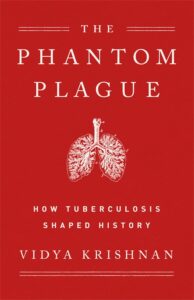
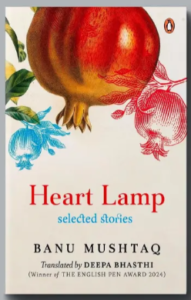
If Lady Doctors interests you, these related reviews may help you explore women’s lives, medicine, public health, and social reform further. The Phantom Plague looks at disease and public-health failure, while Heart Lamp turns toward women’s inner lives and social restrictions through fiction. You may also find my broader lists of books by Indian women writers in English and books by women writers useful for discovering more such voices.
About the reviewer
Manoj Payal
Manoj is an avid reader and a writer in progress, with interests spanning literature, history, politics, and the social sciences. His writing across book reviews, essays, articles, and poetry—explores ideas, society, and the human experience.He has spent over two decades working in the IT industry, a background that informs his analytical approach to reading and writing.