Sakht Launda, Soft Stand: Zakir Khan and the Politics of Silence
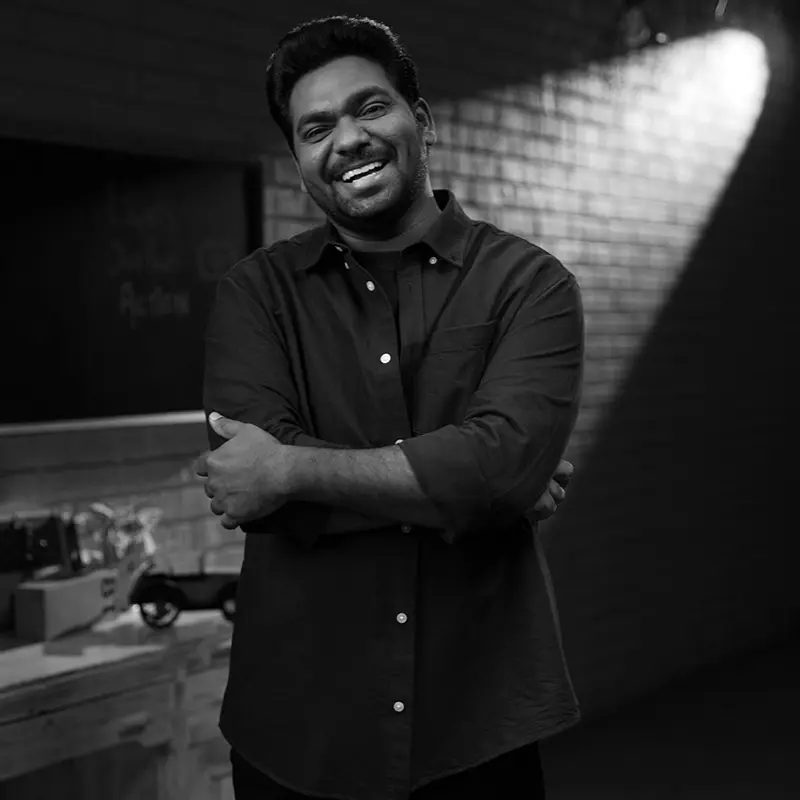
When Zakir Khan walked onto the stage at Madison Square Garden, Hindi stand-up reached a new global milestone. The Indian Express headline aptly sums up the achievement and success: “Zakir Khan at Madison Square Garden: The next global comedy superstar may be an Indian.” The show was sold out, and Zakir joined a list of performers who have filled the same iconic venue, including Chris Rock, Eddie Murphy, Dave Chappelle, and George Carlin.
This piece is not to diminish Zakir’s achievement. It is to ask a different question: when a comedian becomes this visible, does remaining safe and silent also become a kind of stand?
Zakir Khan is only one example here. The larger question is about artists, comedians, influencers, and public figures who speak the language of the youth, build emotional trust with large audiences, and yet remain silent on issues that deeply affect the same people they claim to represent.
However, the similarity largely ends with the venue. While the comedy of these legends is political, anti-establishment, and a social critique, Zakir has so far avoided going into this realm. His comedy is observational, focusing on relationships, middle-class life, and the emotional nerves of his audience.
I find him a great storyteller, more than a comic; he can hold the attention of the audience and take them on a journey with him. Zakir is undoubtedly the most successful comic of recent times, and his growth is phenomenal. But as such a widely popular artist, should he continue avoiding social and political injustices in his comedy?
From Indore to Delhi and now the world, Zakir Khan’s journey is a remarkable success story, marked by early rejections and criticism, which he embraced as lessons to shape his craft. He is a gifted storyteller, and that clicked with the audience; much of his audience relates to his stories, whether it is his “Sakht Launda” persona, his Kaksha Gyarvi act, or other familiar routines.
His simple style, observational humour, and relatively clean material helped him appeal to a wide audience. His comedy increased the scope of Hindi comedy and made stand-up mainstream for Hindi-speaking audiences.
Zakir has carefully cultivated a stage persona of a positive, safe, and progressive comic, which resonates with mainstream audiences and aligns smoothly with media platforms and corporate sponsors. This has ensured broad popularity while avoiding any controversy. The financial dynamics also play a role, as most sponsors like uncontroversial content and engaging in political or social comedy could risk alienating the sponsors.
Perhaps this is the reason why Zakir chooses not to speak on politics or take a stand on issues concerning the citizens of India. And that’s perfectly fine; he is free to choose the subject he wishes to address.
I am not suggesting that every comedian must become an activist or that every performance must carry a political message. An artist has the right to choose their material. But when the same artist uses the language of harmony, identity, and belonging, the silence around injustice becomes more noticeable.
But it raises an age-old question: Is art truly separate from society? Can it remain aloof from the injustices, discriminations, and atrocities happening around it? Isn’t it the responsibility of an artist to raise their voice against the wrongs in society?
This question becomes more striking when we see Zakir’s own words. In one Instagram post, he shared a beautiful sher that reflected his secular and progressive thought.
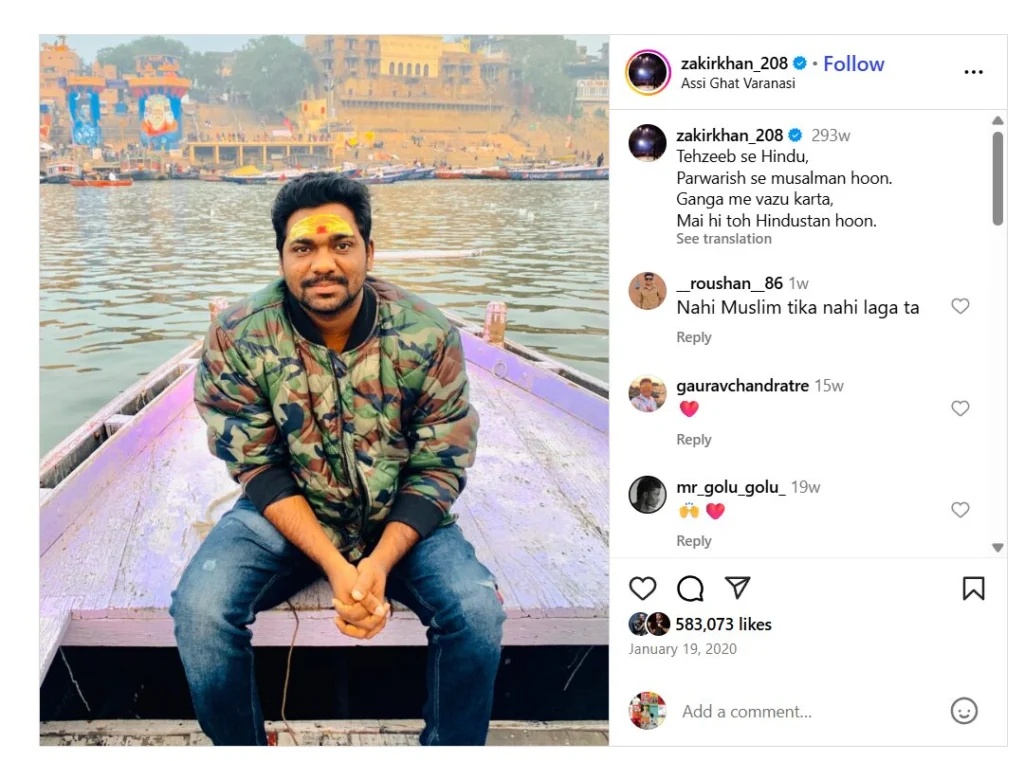
तहज़ीब से हिंदू, परवरिश से मुसलमान हूँ।
गंगा में वज़ू करता, मैं ही तो हिंदुस्तान हूँ।
It is a moving expression of harmony and coexistence, and it reflects his secular thought process. Yet it stands in sharp contrast to the reality around us, where we see mob lynching, censorship, and attacks on Muslims, Dalits, intellectuals, civil society groups, and journalists. My question is how an informed and aware person like Zakir remains seemingly indifferent to these injustices, especially when his secular beliefs are under threat.
The most likely reason I can think of is that he deliberately chooses silence on these issues, knowing very well that speaking out could perhaps dent the carefully maintained positive image he projects.
And yet, in my view, meaningful art cannot remain completely untouched by the injustices of the society in which it exists. You cannot be a mute spectator hiding behind the excuse of being “apolitical” or claiming that you lack the knowledge to comment on the issue. What kind of knowledge do you require to speak against lynching and censorship?
This question of silence also connects with larger questions of freedom of speech and what it means to speak when doing so carries a cost.
Many stand-up comedians continue to speak truth to power, punch up, and address socially relevant topics such as caste, patriarchy, and religion, despite the dangers involved.We have the likes of Kunal Kamra, Varun Grover, Punit Pania, Munawar Faruqui, Manjeet Sarkar, and Daniel Fernandes, who challenge the authority and question the power structure in our society.
The silence of the most visible comic on the pressing issues India is facing means promoting and normalizing apolitical art in a deeply political context. The silence on these issues reassures the majority that “all is well” when it is not, and it sidelines the minority voices. I am not trying to put the onus on Zakir; he represents a wider group of artists who brand themselves as positive, feel-good entertainers. By avoiding pressing social and political questions, they risk normalizing injustice.
Choosing whether to remain ‘apolitical’ or to challenge authority is never easy, but it is crucial. At its strongest, stand-up holds a mirror to society, exposing injustice and flaws in power structures with humour. The goal is to make people and authorities notice and acknowledge what is wrong; if it also nudges those in power to act, it is a bonus.
“Silence becomes cowardice when occasion demands speaking out the whole truth and acting accordingly.”― Mahatma Gandhi
Zakir Khan is a talented comedian and a charismatic storyteller. But to be seen as a true “stand-up” comedian, he needs to take a stand against the power structure. Until then, in my view, he remains a gifted comic and storyteller, but not a stand-up comic in the tradition that challenges power. The essence of that tradition is not just humour, but standing up for what matters.