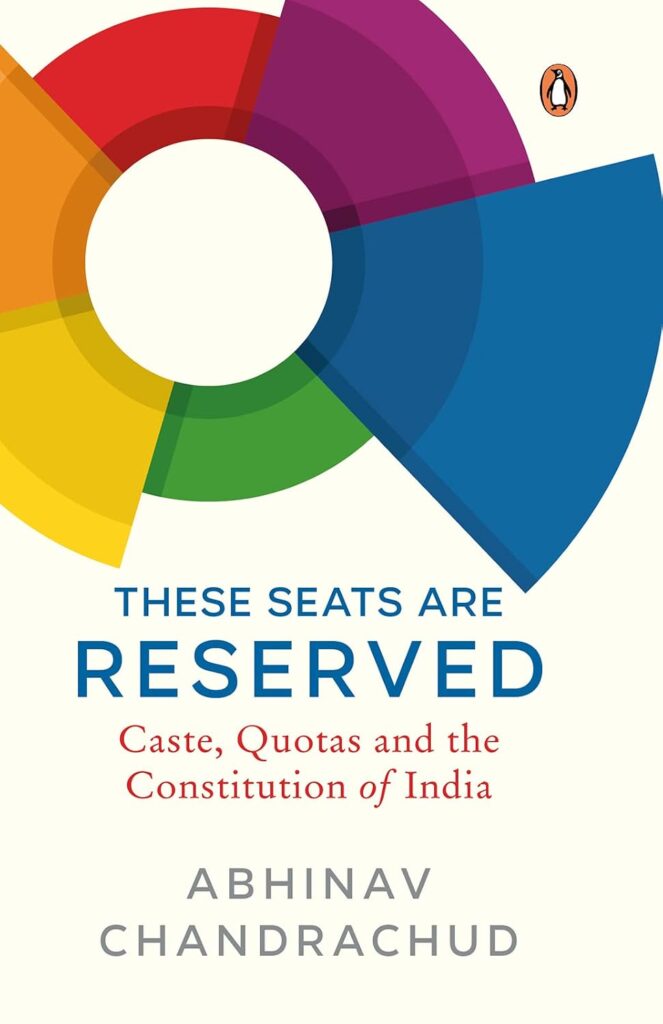
Abhinav Chandrachud’s These Seats Are Reserved explains India’s reservation policy through caste, quotas, constitutional debates, court cases, and questions of equality.
Book: These Seats Are Reserved: Caste, Quotas and the Constitution of India
Author: Abhinav Chandrachud
Form: Legal history / political non-fiction / Indian non-fiction
Subject: The history, evolution, and legal framework of India’s reservation policy
Main themes: reservation, caste, quotas, Constitution of India, equality of opportunity, Scheduled Castes, Scheduled Tribes, OBCs, Constituent Assembly debates, Supreme Court judgments, government jobs, education, and social justice
Best for: Readers interested in caste, reservation policy, Indian Constitution, law, social justice, public policy, Indian politics, and how courts and lawmakers shaped affirmative action in India.
Why I Picked - These Seats Are Reserved
The word reservation generates strong opinions in India. There is a long ongoing debate on the subject. Both ends of the spectrum — supporters and opponents of reservation — have strong and logical arguments in their favour.
However, I feel that we generally do not fully understand reservation, its purpose, and its utility. I firmly believe that to understand it better, we should know the basic framework of reservation: why it was started, when it was started, and how it is implemented.
About - These Seats Are Reserved
The book These Seats Are Reserved takes a deep dive into the subject. The author starts by tracing the origin and evolution of the term Depressed Classes — when it was first used and for whom it was used. He then follows the evolution of the nomenclature from Depressed Classes to Scheduled Castes, Scheduled Tribes, and later Other Backward Classes.
There are some interesting anecdotes about various leaders and their views on reservation.
Though Prime Minister Nehru was in favour of improving the social and economic condition of backward classes in India, he seemed to be against reservations. He felt that there was no point in reserving seats for backward classes in government jobs at the cost of efficiency.
The book delves deep into the constitutional debates on reservation. It takes us through what was discussed in the Constituent Assembly. In the first draft of the Constitution, there was reservation only in legislative bodies and government jobs.
There was no reservation for the Rajya Sabha, ministries, judiciary, municipal corporations, or educational institutions. The reservation policy as we see it today is the result of long discussions and debates by our Constitution makers.
Should reservation be provided only to “untouchables,” or should tribal communities also be covered under it? Does reservation violate the principle of equality of opportunity? What about the debate around merit and efficiency? There were many such questions that the Constitution makers had to face.
The author meticulously covers the journey of reservation, the various legal challenges it faced, and how it evolved over the years. The book also draws attention to the technicalities involved in deciding who qualifies for reservation.
We see how, in order to use reservation in jobs and educational institutions, some people made false claims about their caste. The book explains how the courts dealt with such cases and what legal safeguards were put in place to prevent this from happening in the future.
The book explains in detail how reserved seats are calculated. This part of the book becomes a little technical and heavy. But if you are interested in the subject, or if you are a research student, this book will come in handy.
The author also points out various challenges in filling reserved seats in government jobs. The reasons could include technicalities, a shortage of qualified people from reserved categories, and sometimes simply the bias of upper-caste people. As one member of the Lok Sabha pointed out while discussing why reserved seats were not being filled in government jobs:
Many government officials preferred to hire temporary (or ‘ad-hoc’) employees from the forward communities to do the jobs reserved for backward classes. Further, even when backward-class candidates were selected for jobs, they would be prevented from joining their posts in several ways: e.g., they would be sent their appointment letters late, so that they could not join on time; they would be declared medically unfit, though they would be perfectly fit for the job; or they would be posted to remote areas which are akin to ‘mental torture’.
The book is well researched and well written, providing readers with detailed information about reservation and how it came into being. It explains how reservation stands in its present form and also raises the question of whether it is benefiting only a select few among the reserved categories.
The book provides readers with the constitutional and legal aspects of reservation policy, along with the socio-economic conditions of reserved categories after more than seventy years of independence and reservation.
Who Should Read These Seats Are Reserved
This is a must-read book for anyone who wants to enhance their understanding of reservation policy and how it works. It is especially useful for readers who want to understand what the Constitution says about reservation and how our courts have defined it whenever the policy has been challenged by individuals or groups.
Our Verdict
These Seats Are Reserved is an important and informative book on one of the most debated subjects in India. Abhinav Chandrachud explains the history, legal framework, constitutional debates, court cases, and practical challenges around reservation in a detailed but readable manner.
The book is especially useful because it helps readers move beyond emotional arguments and understand reservation through history, law, policy, and social reality. For anyone who wants to understand caste, quotas, equality, and the Constitution of India, this is a valuable read.
About the author
Abhinav Chandrachud is an advocate who practises at the Bombay High Court. He graduated from the LL.M. program at Harvard Law School, where he was a Dana Scholar, and from the JSM and JSD programs at Stanford Law School, where he was a Franklin Family Scholar.
Related Readings


About the reviewer
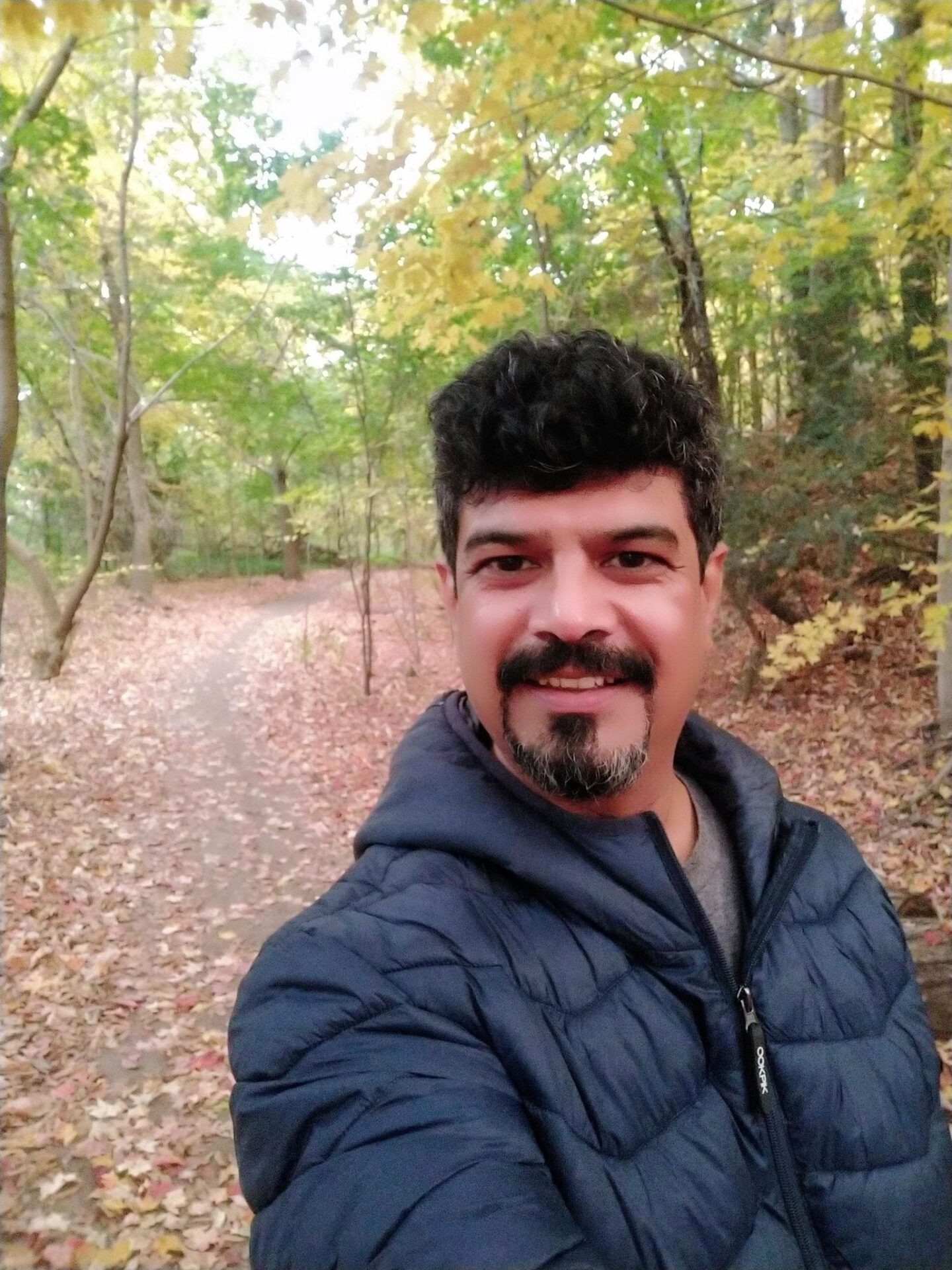
Manoj Payal
Manoj is an avid reader and a writer in progress, with interests spanning literature, history, politics, and the social sciences. His writing across book reviews, essays, articles, and poetry—explores ideas, society, and the human experience.He has spent over two decades working in the IT industry, a background that informs his analytical approach to reading and writing.