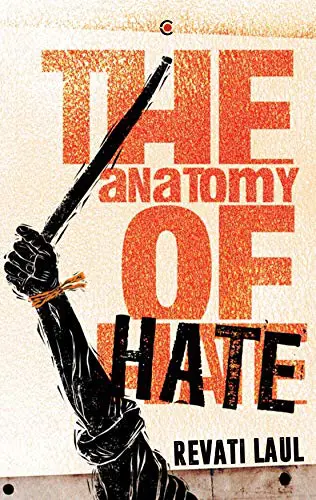
Anatomy of Hate by Revati Laul is a gripping and thought-provoking examination of the 2002 Gujarat riots, exploring how ordinary people can be drawn into acts of communal violence. Through the lives of three men involved in the violence, Laul investigates the powerful combination of politics, prejudice, economic frustration, and social pressure that can turn anger into hate.
Book: Anatomy of Hate
Author: Revati Laul
Form: Narrative nonfiction / investigative journalism / political reportage
Subject: The lives of three men involved in the 2002 Gujarat riots and the social, political, economic, and psychological forces that drew them into communal violence.
Main themes: communal violence, hatred, religious polarisation, mob mentality, political manipulation, prejudice, inequality, anger, guilt, responsibility, remorse, and human psychology
Best for: Readers interested in Indian politics, modern Indian history, investigative journalism, communal conflict, social psychology, and understanding how ordinary people can become participants in collective violence.
Why I Picked The Anatomy of Hate
I have seen many changes post 2014 and one significant change was the increase of hatred among common citizens against the “other”. And this other was manufactured and decided by someone above and then amplified by the media every night in their prime time show. This is when I came across this book and decided to read it to understand what actually constitutes hate? How it sowed in the minds of people – young, adult and old?
About The Anatomy of Hate
Published as an investigation into the human forces behind communal violence, Anatomy of Hate follows three men whose lives were transformed by the events of the Gujarat riots. Rather than focusing only on political leaders, statistics, or the chronology of the violence, Laul turns her attention to individuals who became part of the mobs.
Through extensive reporting and personal conversations, she attempts to understand how resentment, social inequality, political influence, religious prejudice, and personal frustration can combine to push people towards violence. The result is a disturbing yet deeply revealing study of hate and the circumstances in which it can flourish.
A Deep Dive into Hate
Anatomy of Hate is a powerful exploration of the minds of individuals who committed violent crimes during the 2002 Gujarat riots. On the morning of February 27, 2002, a fire in one of the coaches of the Sabarmati Express near Godhra station claimed the lives of more than 50 Hindu pilgrims. While the cause of the fire remains disputed, its aftermath sparked widespread communal violence targeting Muslims, resulting in hundreds of deaths and leaving thousands homeless.
Through Anatomy of Hate, Revati Laul goes beyond the headlines to examine the social, economic, and psychological factors that turned ordinary citizens into participants in horrific violence.
The Story of Three Men
The book follows the lives of three men from different social and economic backgrounds who were part of the mob. Through their experiences, Laul seeks to understand what drives ordinary people to commit extraordinary acts of violence.
“The twenty-eighth was not a calendar day. It was a black hole that bent time. In the lives of Suresh, Dungar, and Pranav, it rearranged all previous days and experiences… Choice is a vexing word. What part of choice applies when a tidal wave of anger tears through a state?”
By telling their stories, Anatomy of Hate exposes the internal struggles, suppressed frustrations, and external pressures that can contribute to communal violence.
Hate, Politics, and Manipulation
Laul’s research shows how political forces and societal structures can exploit existing tensions. Vulnerable individuals may be drawn into violent acts, fuelled by promises, prejudices, or long-suppressed anger. The book highlights how politicians can manipulate public sentiment, fan religious divisions, and use ordinary citizens to further their agendas.
“There was a part of Dungar that was always ashamed of not having a pucca house with a marble floor like some Muslim traders had built… Now was the chance for that long-suppressed rage to merge with the tidal wave sweeping across Gujarat. Anger with a purpose.”
Anatomy of Hate examines not only the acts of violence themselves but also the societal conditions that make such violence possible.
Aftermath and Reflection
The book also explores the aftermath of the riots. Laul investigates whether the perpetrators felt remorse, accepted responsibility, or attempted to make amends. Through these reflections, Anatomy of Hate forces readers to confront uncomfortable truths about human nature, mob mentality, and the fragility of moral judgment during periods of communal tension.
By chronicling these stories, the book reminds us of what society can become when hatred is allowed to fester unchecked.
Who Should Read This Book
Anatomy of Hate is particularly relevant for readers interested in modern Indian history, politics, journalism, sociology, psychology, and communal relations. Students and researchers studying political violence, religious conflict, mob psychology, or the Gujarat riots will find the book especially valuable.
It is also worth reading for anyone interested in understanding how prejudice develops, how political narratives influence individuals, and how seemingly ordinary people can become participants in collective violence. Because of its disturbing subject matter, however, readers should be prepared for descriptions and discussions of communal violence.
Our Verdict
Anatomy of Hate is a compelling and necessary read for anyone seeking to understand the 2002 Gujarat pogrom and the mechanisms through which ordinary individuals can be drawn into acts of violence. Laul’s meticulous research, vivid storytelling, and nuanced analysis make the book a profound study of human psychology, societal manipulation, and the destructive power of hate.
Whether you are a student of history, politics, sociology, or human behaviour, Anatomy of Hate provides crucial insights into the consequences of unchecked hatred and the importance of safeguarding empathy, justice, and social harmony.
About the author
Revati Laul is an independent journalist and filmmaker based in New Delhi. She began her career in television before moving towards print and independent journalism, contributing to publications including The Quint and The Hindustan Times. Anatomy of Hate is her first book.
Related Readings



About the reviewer

Manoj Payal
Manoj is an avid reader and a writer in progress, with interests spanning literature, history, politics, and the social sciences. His writing across book reviews, essays, articles, and poetry—explores ideas, society, and the human experience.He has spent over two decades working in the IT industry, a background that informs his analytical approach to reading and writing.