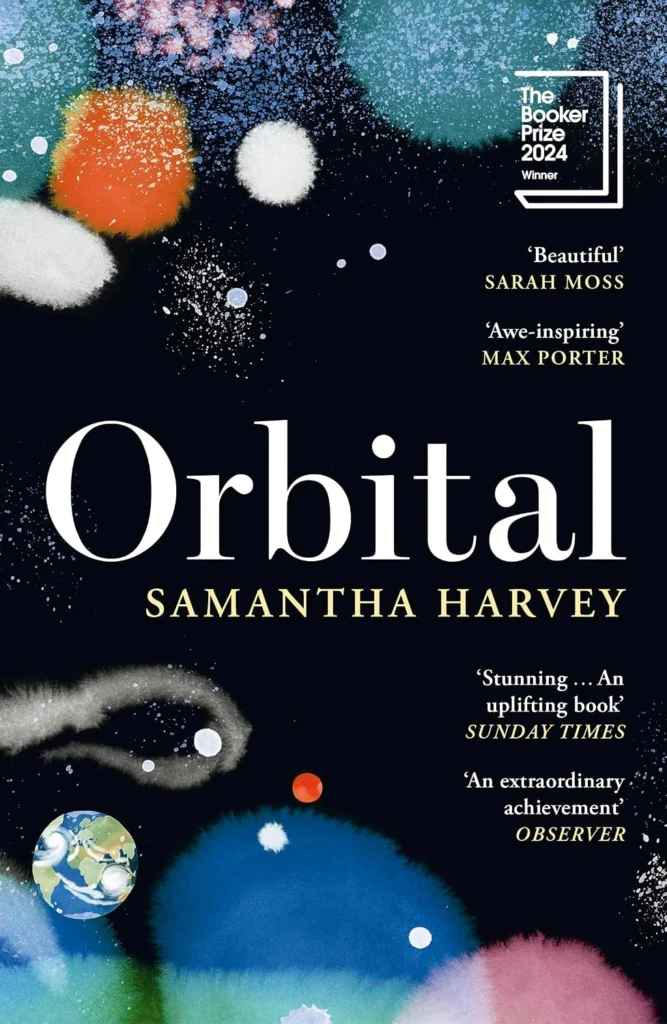
Orbital by Samantha Harvey is a story about six astronauts on a space station, their day-to-day lives, and how they view Earth from a distance. It also asks what it means to be inhabitants of planet Earth. It is a philosophical reflection on the vastness of the universe in relation to Earth and human beings — a reminder that despite all that humankind has achieved, and despite everything we think of Earth, it is still just a dot in the universe. Orbital needs to be read slowly, absorbing and understanding the weight of its words.
Book: Orbital
Author: Samantha Harvey
Form: Literary fiction / philosophical fiction
Setting: A space station orbiting Earth
Subject: Six astronauts observing Earth over the course of one day while reflecting on life, home, humanity, nature, time, and the fragility of the planet. The Booker Prize describes the book as focusing on human occupation of low Earth orbit “not as sci-fi but as realism.”
Main themes: Earth, space, human existence, borders, climate change, nature, memory, family, time, loneliness, human self-importance, beauty, destruction, and the fragility of life
Best for: Readers who enjoy literary prose, reflective writing, philosophical fiction, and books that make them pause and think rather than follow a conventional plot.
Award: Winner of the Booker Prize 2024.
Why I Picked Orbital
Orbital won the Booker Prize in 2024, and that made me curious about the book. I always admire writers who can enthrall readers with their writing, and any book that wins the Booker Prize comes with a certain expectation of literary excellence. It had been on my reading list for quite some time, and finally, I decided to pick it up as my next read.
About Orbital
Orbital is the story of six astronauts on a space station revolving around the earth at a speed of thousands of miles per hour – completing sixteen rounds of earth in twenty-four hours – and thus witnessing sixteen sunrises and sixteen sunsets in twenty-four hours. The astronauts are from different countries, and the book captures their mundane lives and their memory of earth and how they see planet earth from space – physically, emotionally, and philosophically.
It takes a couple of chapters to make sense of the setting and understand its rhythm. But once readers can visualise the astronauts on the space station and the way they are circling Earth, the book begins to grow on you. It is more philosophical than a conventional space or sci-fi novel.
The author narrates parts of the story through the astronauts — how they remember Earth, their families, and their loved ones who are so far away from them. At other moments, she steps in as the narrator and offers readers a philosophical commentary on the universe, Earth, human existence, and much more.
This book needs to be read slowly, absorbing the words, the thought behind the words. It makes the reader pause and think about our actions and what we have done to earth in the last 400-500 years in the name of progress – and poses some ethical question what is the limit? When will we stop?
Can humans not find peace with one another? With the earth? It’s not a fond wish but a fretful demand. Can we not stop tyrannising and destroying and ransacking and squandering this one thing on which our lives depend?
Looking from the space the earth is one unit for the astronauts. Back on the earth they may be divided by borders, flags and by countries but in the space, they are all one – they all belong to earth. Here in space the boundaries vanish. The author also ponders on the self-importance of humans in the grand scheme of things and believes that our sense of superiority is misplaced, because from space, human conflicts, ambitions, borders, and achievements appear very small against the vastness of Earth and the universe.
The planet is shaped by the sheer amazing force of human want, which has changed everything, the forests, the poles, the reservoirs, the glaciers, the rivers, the seas, the mountains, the coastlines, the skies, a planet contoured and landscaped by want.
Alongside its philosophical reflections, Orbital also gives readers a glimpse of how astronauts live on a space station: how they receive supplies such as food and clothes, how waste is sent back and burned up before reaching Earth, and how spacewalks are carried out when something needs to be installed or repaired outside the station.
You will also get to know the problem of space debris — the “tens of thousands of remnants of jettisoned or exploded satellites and launch-vehicle stages and craft” left behind in orbit. This becomes another reminder of the damage human beings leave wherever they go. As the author writes, “Wherever mankind goes it leaves some kind of destruction behind it, perhaps the nature of all life, to do this.”
Who Should Read Orbital
Orbital is for readers who enjoy literary prose and reflective writing. You might find it slow if you are looking for a conventional story with a clear plot, but if you enjoy reading between the lines and discovering meaning beyond the obvious, you will appreciate it. It is the kind of book that makes you pause, think, and look at the world a little differently.
About the author
Samantha Harvey is the author of the novels Orbital, The Wilderness, All is Song, Dear Thief and The Western Wind and a work of non-fiction, The Shapeless Unease: A Year of Not Sleeping. Orbital was the winner of the Booker Prize 2024, and her other work has been shortlisted for the James Tait Black Award, the Women’s Prize, the GuardianFirst Book Award and the Walter Scott Prize. The Wilderness was awarded the Betty Trask Prize. She is a tutor on the MA course in Creative Writing at Bath Spa University.
Related Readings


About the reviewer
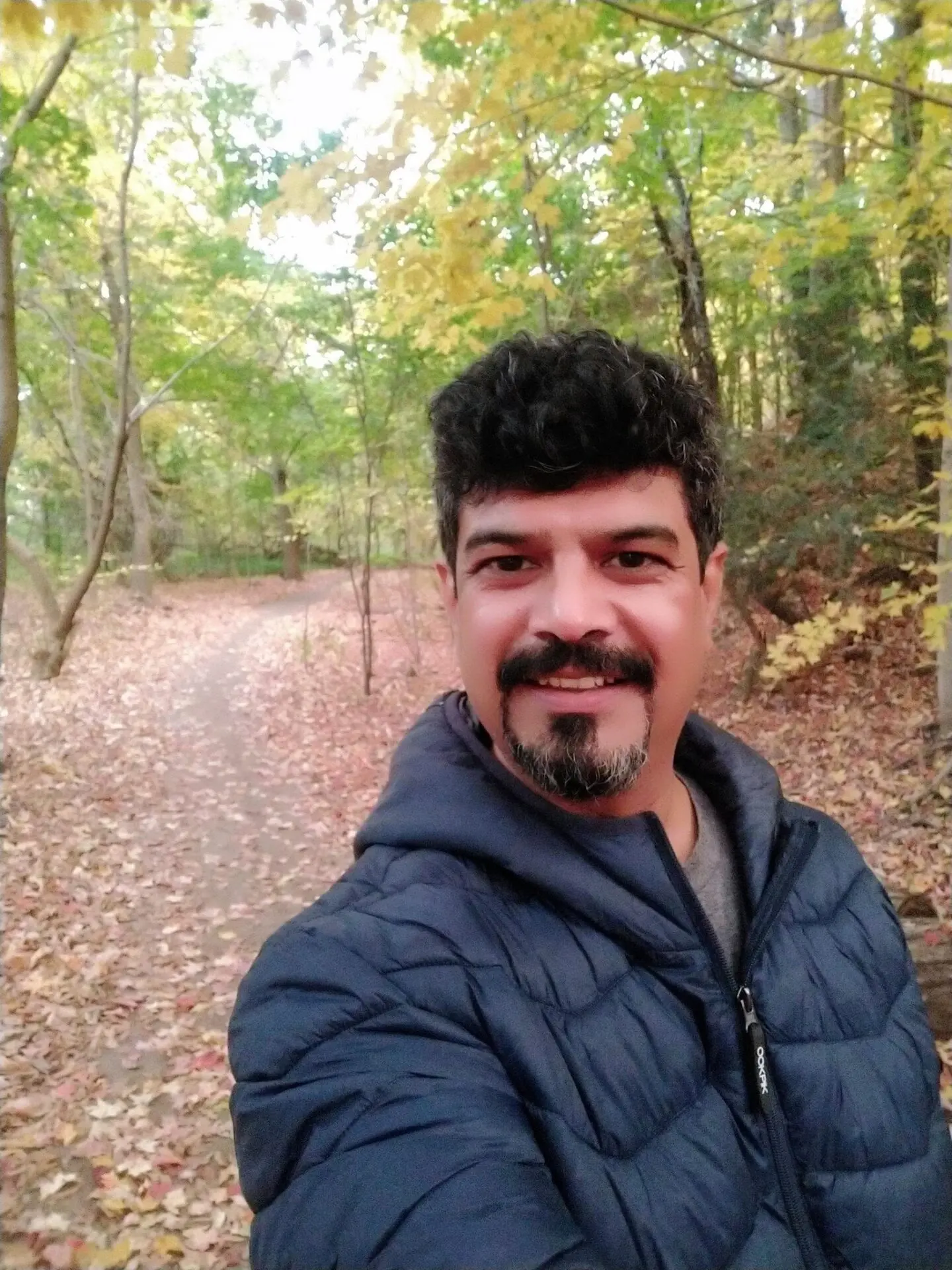
Manoj Payal
Manoj is an avid reader and a writer in progress, with interests spanning literature, history, politics, and the social sciences. His writing across book reviews, essays, articles, and poetry—explores ideas, society, and the human experience.He has spent over two decades working in the IT industry, a background that informs his analytical approach to reading and writing.