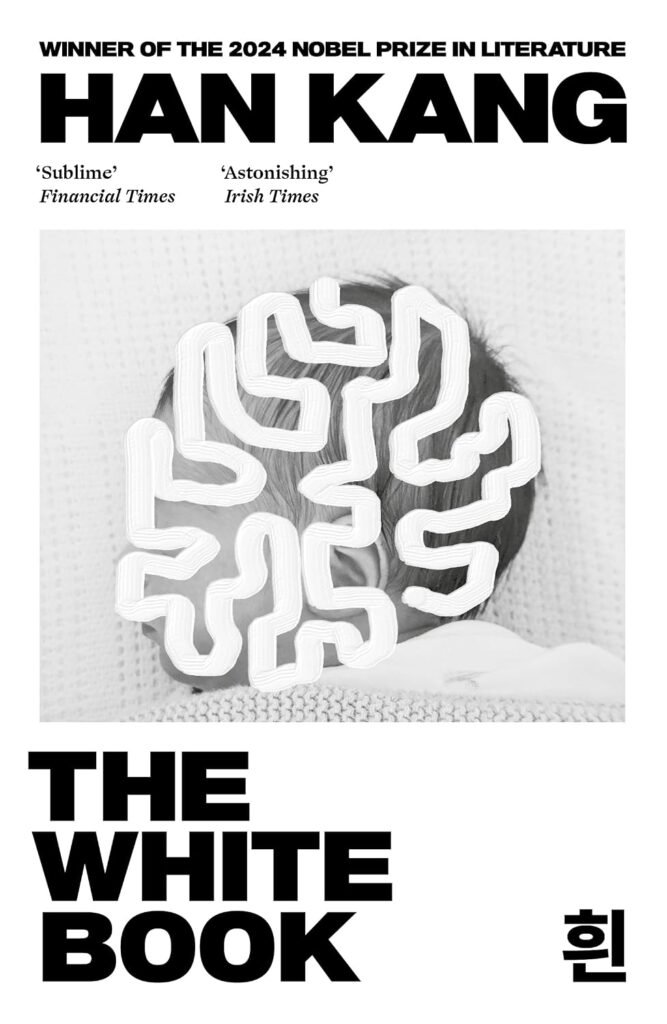
The White Book by Han Kang is unique book – it can be read as a prose or a poetry, depending on how you want to read and absorb it. The author decided to write about white things and made a list of words she would like to explore. Through those words, she writes about memories, grief, pain and longing for someone far beyond the realm of this world. Through the book, the author remembers her sister whom she never met and have no physical memories of, as she died hours after her birth.
Book: The White Book
Author: Han Kang
Translated by: Deborah Smith
Form: Literary fiction / fragmentary prose / poetic meditation
Subject: Memory, grief, whiteness, loss, and Han Kang’s imagined connection with the sister she never met
Main themes: grief, memory, mourning, whiteness, birth, death, silence, healing, writing, family, absence, longing
Best for: Readers who enjoy quiet, reflective, poetic books that are more about emotion, memory, and language than plot.
WhWhy I Picked - The White Book
This is my fourth book by Han Kang, and the more I read her, the more I am fascinated by her writing. It took me time to read The Vegetarian, the first book by Han Kang that I read. It was a difficult read, not because of the language, but because of its psychological depth and symbolic style. The book does not explain everything directly, and much of its meaning lies beneath the surface. Still, Han Kang’s writing was precise, unsettling, and deeply impactful, and each word in her book has a purpose. I liked that very much in her writing. After reading her three books, especially the last one that I read, Human Acts, I became an ardent fan of her writing. Now I do not need a reason to pick up a book by Han Kang.
About - The White Book
The White Book is about memories – the author goes back to memory lane by reflecting on different white objects. The author says she decided to write about white things one spring while she was away from home in a European city for a writing project. She lists white objects like snow, sugar cubes, salt, moon, rice, white dog and decided to write a book around them.
It becomes a book through which she tries to bring out what is inside her and, in the process, transform herself. As Han Kang herself writes, the process of writing the book was meant to be transformative, almost “like white ointment applied to a swelling, like gauze laid over a wound. Something I needed.”
There are short chapters, each centered on one white object. Through them she remembers her sister, who died within hours of her birth and imagines how she might have lived, acted, or reacted in ordinary day-to-day moments. In the process of writing, she goes back to memories, some fond, some sad, some tragic and tries to place all those emotions on paper.
Each piece is self-contained, and some of them even feel like poems. This is not a book that moves linearly; instead, it is emotion that connects the objects and chapters to one another. The author herself becomes the protagonist, as she reminisces about her childhood, her dead sister, her mother, her dog, and her uncle, all through one white object or another. The way she weaves her words while talking about her sister, remembering her through white objects such as a newborn gown or moon-shaped rice, is pure magic.
The White Book is a slow read. It is a short book and easy to read in the sense that each chapter, if I may call it that, is complete in itself. You can read one chapter at a time and absorb not only what the author says, but also what is left unsaid. There are some chapters where you need a little context to understand them completely, such as the ones where she describes the city of Warsaw and the museum she refers to. However, what remains universal is the love and longing we feel for those who are no longer with us — even for someone we have never seen.
Who Should Read - The White Book
The White Book is for readers who enjoy slow, meditative, and poetic writing. It may not appeal to readers looking for a conventional story, but those who like books that explore grief, memory, silence, and the emotions left unsaid will find it deeply moving. It is especially for readers who admire Han Kang’s precise writing and want to experience a book that can be read both as prose and as poetry.
About the author
Han Kang was born in Gwangju, South Korea, and moved to Seoul at the age of ten. She studied Korean literature at Yonsei University. Her writing has won the Yi Sang Literary Prize, the Today’s Young Artist Award, and the Korean Literature Novel Award. The Vegetarian, her first novel to be translated into English, was published by Portobello Books in 2015 and won the 2016 Man Booker International Prize. She is also the author of Human Acts (Portobello, 2016) and The White Book (Portobello, forthcoming 2017). She is the winner of Nobel prize for literature 2024. She is based in Seoul.
About The Translator
Deborah Smith’s translations from the Korean include two novels by Han Kang, The Vegetarian and Human Acts, and two by Bae Suah, A Greater Music and Recitation. In 2015 Deborah completed a PhD at SOAS on contemporary Korean literature and founded Tilted Axis Press. In 2016 she won the Arts Foundation Award for Literary Translation. She tweets as @londonkoreanist. Tilted Axis’ first titles include a darkly erotic Bengali novella, an obliquely allegorical take on South Korea’s social minorities, and a feminist, environmentalist narrative poem from Indonesia, published as a ‘sight-impaired-accessible’ art book. These will be followed by translations from Thai, Uzbek, and Japanese.
Related Readings

About the reviewer
Manoj Payal
Manoj is an avid reader and a writer in progress, with interests spanning literature, history, politics, and the social sciences. His writing across book reviews, essays, articles, and poetry—explores ideas, society, and the human experience.He has spent over two decades working in the IT industry, a background that informs his analytical approach to reading and writing.