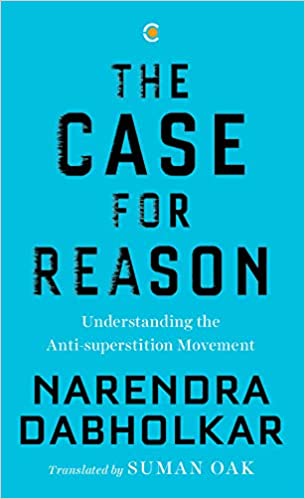
The Case for Reason: Volume One: Understanding the Anti-superstition Movement by Narendra Dabholkar is a powerful book about superstition, blind faith, pseudo-science, rational thinking, and the work of the Andhashraddha Nirmoolan Samiti. Translated by Suman Oak, the book explains why scientific temper is necessary for a progressive society and how Dabholkar and ANiS challenged superstition in Maharashtra through real-life examples, public debates, and rational arguments. This review looks at how the book helps readers understand the importance of reason in personal and social life. The publisher describes the book as both a vision document and a chronicle of Dabholkar’s battle against superstition, pseudo-science, and blind faith
Book: The Case for Reason: Volume One: Understanding the Anti-superstition Movement
Author: Narendra Dabholkar
Translated by: Suman Oak
Form: Social reform / rationalist non-fiction / Indian non-fiction
Subject: The anti-superstition movement and the importance of scientific temper
Main themes: superstition, blind faith, pseudo-science, rationality, scientific temper, astrology, religious belief, social reform, ANiS, Maharashtra, and public reasoning
Best for: Readers interested in rational thinking, social reform, Indian non-fiction, superstition, scientific temper, religion and society, and the anti-superstition movement.
The Case for Reason
I remember first hearing about Narendra Dabholkar through news channels. When Govind Pansare and later Gauri Lankesh were shot dead, there was also coverage about Dabholkar, mentioning how he was shot dead because of his rationalist views against superstitions and the blind following of many rituals.
It was then that I thought of reading more about him and his work.
About Case for Reason
The Case for Reason: Volume One: Understanding the Anti-superstition Movement talks about the various superstitions that exist in our society and the challenges and backlash faced by Dabholkar and his organisation.
The book broadly covers the superstitions and pseudo-science prevalent in society and the role of ANiS, the Andhashraddha Nirmoolan Samiti, or Committee for the Eradication of Superstition. It provides various real-life examples of blind faith and superstition from Maharashtra and shows how the organisation challenged them.
The book also discusses practices that are often presented as scientific and confronts them with logic and rationality. Astrology and Vastushastra, for example, are believed to be sciences by many people in India. Dabholkar and ANiS strongly refute these claims, even though such beliefs are accepted by many educated people in our country.
Dabholkar argues that the popularity of a belief does not make it scientific. Many people may take comfort in astrology, but that alone cannot prove its truth or scientific value. For something to be called science, it must fulfil the criteria of scientific inquiry, evidence, and rational testing.
The book cites many examples of superstitions challenged by ANiS. In several cases, ANiS asked for public debate on the truth of claims made by followers of cults, godmen, and staunch believers of certain religious practices.
Because of this challenge to long-held beliefs, Dabholkar and ANiS were often criticised as anti-Hindu. They also faced threats and backlash for allegedly meddling with people’s religious sentiments. At the same time, some people accused them of remaining silent about Brahminical rituals and targeting only Dalit, Bahujan, and minority communities. Dabholkar addresses this allegation in the book as well.
All in all, the book provides a broad overview of the superstitions surrounding us. It shows how rational thinking and scientific temper can help build a more progressive society and country.
Who Should Read The Case for Reason
The Case for Reason is for readers who want to understand why scientific temper and rational thinking matter in everyday life. It is especially useful for those interested in superstition, blind faith, pseudo-science, astrology, social reform, and the anti-superstition movement in India.
The book is also important for readers who want to understand Narendra Dabholkar’s work and the role of ANiS in challenging exploitative practices. It may make some readers uncomfortable, especially where it questions beliefs that are widely accepted, but that is also what makes the book necessary.
Our Verdict
The Case for Reason is a very good read for understanding the importance of rational and scientific thinking. Through many real-life examples, the book shows how common people are exploited in the name of superstition, blind faith, and pseudo-science.
What makes the book important is that it does not merely criticise superstition from a distance. It shows how superstition works in society, how people defend it, and how difficult it is to challenge beliefs that are deeply rooted in culture and religion. For anyone interested in reason, social reform, and scientific temper, this is an important and thought-provoking read.
About the author and Translator
Dr Narendra Dabholkar was a trained medical doctor. After practising medicine for a few years, he decided to close his dispensary and devote himself full-time to social work. He was the founder-president of the Andhashraddha Nirmoolan Samiti, or ANiS. He wrote twelve books about the anti-superstition movement.
Suman Oak was a professor of education at SNDT Women’s University.
Related Reading
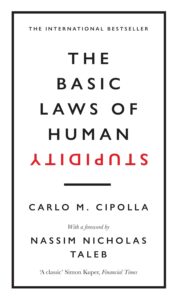
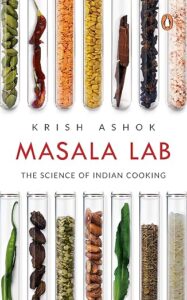
If The Case for Reason interests you, these related reviews may help you explore reason, science, public health, and human behaviour further. The Basic Laws of Human Stupidity looks at irrational behaviour and its danger to society, while Masala Lab uses science to question everyday kitchen myths and assumptions. Readers interested in science, public health, and the consequences of ignoring evidence may also find The Phantom Plague useful.

About the reviewer

Manoj Payal
Manoj is an avid reader and a writer in progress, with interests spanning literature, history, politics, and the social sciences. His writing across book reviews, essays, articles, and poetry—explores ideas, society, and the human experience.He has spent over two decades working in the IT industry, a background that informs his analytical approach to reading and writing.