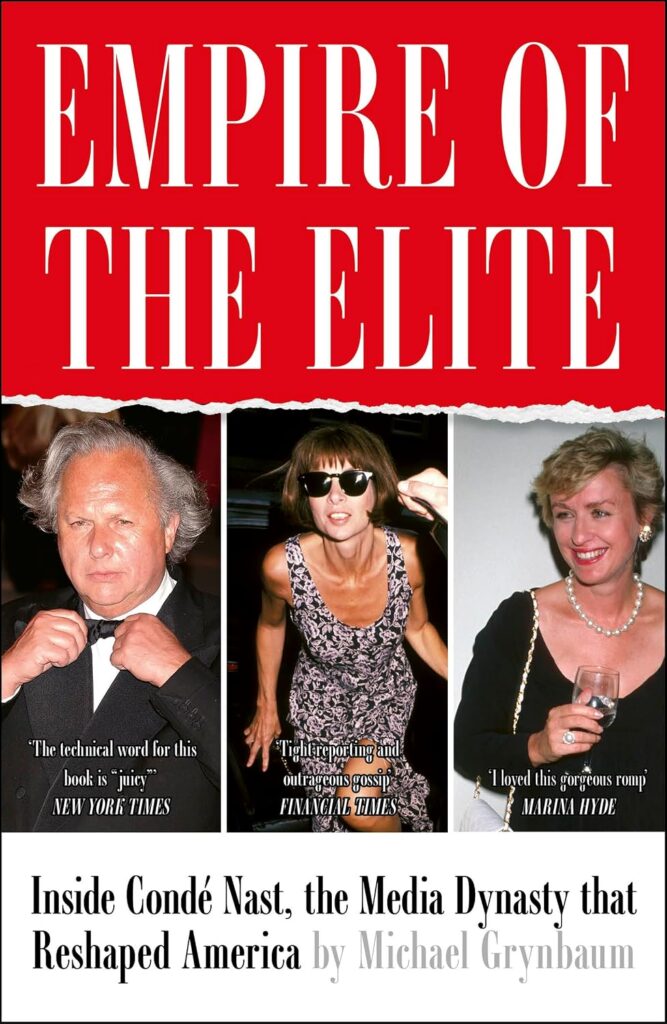
Empire of the Elite by Michael M. Grynbaum is about the publishing house Condé Nast. Most of us may not be immediately familiar with the name, but magazines such as Vogue, Vanity Fair, GQ, and The New Yorker come from the Condé Nast stable. As Grynbaum puts it, “before Instagram, TikTok, there was Condé Nast Publications, merchant of fantasies and arbiter of sophistication.” The book captures the history, influence, glamour, power, and decline of these magazines, along with the people and owners who shaped them.
Book: Empire of the Elite: Inside Condé Nast, the Media Dynasty That Reshaped America
Author: Michael M. Grynbaum
Form: Media history / cultural history / non-fiction
Subject: The rise, influence, glamour, and transformation of Condé Nast and its magazines
Main themes: Condé Nast, magazine culture, media power, elite taste, glamour, celebrity editors, publishing, fashion, journalism, luxury, cultural influence, and the decline of print media
Best for: Readers interested in media history, journalism, publishing, fashion magazines, cultural power, American media, and how magazines shaped ideas of taste, status, and aspiration.
Why I picked Empire of The Elite
I came across this book accidentally while browsing in the library. The title caught my attention, and after reading the blurb, I found the subject interesting. My last few reads had been heavy non-fiction and an emotional novel, so I wanted to pick up something different. This book felt like a good opportunity to know more about Condé Nast and the world of media, magazines, glamour, and cultural influence.
About - Empire of The Elite
The book is about the Newhouse family and the publishing empire they built over the years. It tells the story of how the Newhouse family bought Condé Nast Publications in 1959 and retained the Condé Nast name, partly because Newhouse was not a name that carried the same glamour or acceptance in the upper circles of society.
The book gives us a brief history of Vogue, its earlier owners, and how it had already become a recognised name in fashion and society before the Newhouse family acquired Condé Nast in 1959. Under Si Newhouse, the larger Condé Nast empire expanded its power, glamour, and cultural influence even further. It takes us through the many ups and downs of the publishing house, along with the stories of different magazines under its wing and the editors who helped turn those magazines into cultural institutions.
Empire of the Elite also dives deep into how the brand became an epitome of glamour, glitz, upper-class taste, cultural influence, and media power. Through magazines like Vogue, Vanity Fair, GQ, and The New Yorker, Condé Nast did not merely publish stories; it shaped aspirations, defined sophistication, and influenced how generations imagined fashion, celebrity, luxury, politics, and modern culture.
Condé Nast and the Making of Cultural Taste
Vogue was already an established brand before Samuel Newhouse purchased the parent company Condé Nast. It was purchased by Condé Montrose Nast in 1909 and under him it became a major fashion and society magazine, expanded internationally with British Vogue in 1916.
Before the Newhouse family entered the picture, Condé Nast had already built a powerful magazine stable around Vogue. He added titles such as House & Garden, Vanity Fair, international editions of Vogue, The American Golfer, and later Glamour. By the time of his death in 1942, Condé Nast was already associated with elite taste, fashion, interiors, society, glamour, and the idea of magazines as carefully curated worlds of aspiration.
Si Newhouse, Editors, and the Culture of Power
Under Si Newhouse the Condé Nast publications reached its zenith. He along with a team of some brilliant editors took the publication house to new heights, so much so that all the big names from politics, entertainment and business were featured on the cover of its magazines and it was a matter of pride to be featured on it.
The Hollywood movie The Devil Wears Prada is widely believed to be inspired by Anna Wintour and the intense world of Vogue, showing how powerful Condé Nast’s image had become in popular culture.
Under Si Newhouse, Condé Nast expanded far beyond its older titles. He revived Vanity Fair, acquired The New Yorker, and added or developed magazines such as GQ, Self, Allure, Details, Bon Appétit, Architectural Digest, Wired, and Teen Vogue. These publications helped turn Condé Nast into a powerful symbol of taste, glamour, journalism, celebrity culture, lifestyle, and elite influence.
Who Should Read This Book
Anyone interested in the history of some of the most iconic fashion, lifestyle, and magazine brands will enjoy the inside look this book offers. Readers who are curious about fashion, upscale lifestyle, publishing, media power, celebrity culture, and the people behind magazines like Vogue, Vanity Fair, GQ, and The New Yorker will find the book especially interesting.
It is also a good read for those who want to understand how magazines once shaped ideas of glamour, taste, sophistication, and cultural influence before the rise of social media. The book will appeal to readers who enjoy media history and stories about powerful editors, owners, and institutions that helped define what the elite world looked like.
About the author
Michael M. Grynbaum is a correspondent for The New York Times, where he covers media, politics, and culture. He has reported on three presidential campaigns, two New York City mayors, and the transformation of the media world in the Trump era. He graduated from Harvard with a degree in history and literature, and lives in Manhattan with his wife and cat.
Related Readings


About the reviewer

Manoj Payal
Manoj is an avid reader and a writer in progress, with interests spanning literature, history, politics, and the social sciences. His writing across book reviews, essays, articles, and poetry—explores ideas, society, and the human experience.He has spent over two decades working in the IT industry, a background that informs his analytical approach to reading and writing.