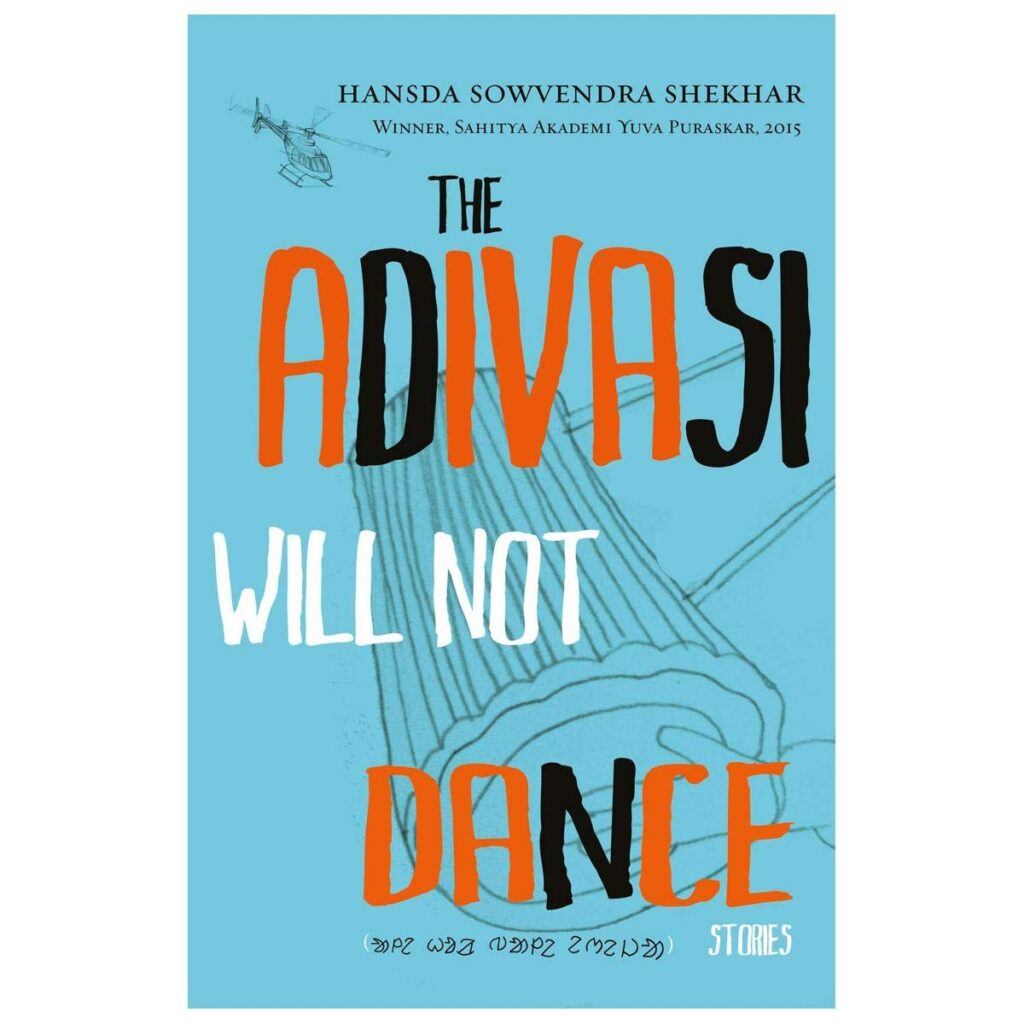
The Adivasi Will Not Dance by Hansda Sowvendra Shekhar is a powerful collection of short stories about Adivasi life, poverty, exclusion, survival, and resistance in Jharkhand. Through stories set in villages, towns, and migrant spaces, the book captures the everyday struggles of Santhal and other Adivasi communities. This review looks at how the collection portrays oppression, displacement, dignity, and the painful cost of being pushed to the margins of society.
Book: The Adivasi Will Not Dance
Author: Hansda Sowvendra Shekhar
Form: Short stories / Indian fiction
Subject: Adivasi lives, poverty, exclusion, and resistance in Jharkhand
Main themes: Adivasi identity, Santhal lives, poverty, displacement, exploitation, migration, cultural loss, gender, survival, dignity, and resistance
Best for: Readers interested in Indian fiction, short stories, Adivasi writing, Jharkhand, marginalized communities, caste, class, poverty, and socially engaged literature.
Why I Picked The Adivasi Will Not Dance
The book was acclaimed as a brilliant collection of short stories about the tribal people of Jharkhand. It was also in the news because it was banned in Jharkhand for political reasons. This intrigued me and made me want to read the book to understand what exactly had offended the government and some people in Jharkhand.
About The Adivasi Will Not Dance
The Adivasi Will Not Dance is a collection of ten short stories set in the towns and villages of Jharkhand. Each story tells us about the lives of tribal people and the challenges they face across the state. The stories capture different facets of tribal culture, along with the oppression and exclusion they face on a day-to-day basis.
The stories are hard-hitting and disturbing at times. You come to know what people are forced to do for survival, and it makes you feel sick and enraged at the same time. At the end of every misery, or perhaps at the beginning of every misery, lies poverty. This is what the author brings forth so powerfully.
There is a story about a couple who move to a different state, only to find that they cannot eat meat if they want to be accepted as citizens. There is the story of an old woman who is labelled a witch when people in the village begin to die mysteriously. There is also the story of a girl who migrates to West Bengal in search of work and is forced into a deeply exploitative situation for fifty rupees and two bread pakoras.
You go through a range of emotions as you read each story and realise that poverty is one common factor behind much of the oppression and subjugation that takes place across the state.
All the stories make you feel for the characters. The last story stayed with me long after I finished the book. Every time I come across the title, I am reminded of Mangal Murmu, the man who says, “We Adivasis will not dance.”
But I did not share my plan with anyone. I went ahead alone, like a fool. They grabbed me, beat me to the ground, put their hands on my mouth, and gagged me. I felt so helpless and so foolish.
I only said, ‘We Adivasis will not dance anymore’ – what is wrong with that? We are like toys – someone presses our ‘ON’ button or turns a key in our backsides, and we Santhals start beating rhythms on our tank and tamdak or start blowing tunes on our tiriyo while someone snatches away our very dancing grounds. Tell me, am I wrong?
Writing Style
The writing is crisp and gives readers a glimpse of an insider’s perspective into the lives of Santhals. Each story brings out a new facet of the lives of ordinary tribal people and keeps the reader hooked.
The book is easy to read, but it will make you pause and think. Its language may feel simple, but the stories leave behind a strong emotional and political impact.
Who Should Read The Adivasi Will Not Dance
The Adivasi Will Not Dance is for readers who want to understand the lives of Adivasi communities beyond stereotypes and token representation. It will especially appeal to those interested in Indian short stories, Jharkhand, Santhal lives, poverty, displacement, exploitation, and the everyday struggles of marginalised people. Readers who appreciate hard-hitting fiction that is simple to read but emotionally difficult to forget will find this book meaningful.
Our Verdict
The Adivasi Will Not Dance is an excellent read for understanding the lives of tribal people in Jharkhand. The stories are powerful, painful, and deeply political without losing their human core. They show poverty, exclusion, exploitation, and resistance through characters who stay with you long after the book is over.
About the author
Hansda Sowvendra Shekhar is a medical officer with the Government of Jharkhand. He is also the author of the critically acclaimed novel The Mysterious Ailment of Rupi Baskey, which was shortlisted for The Hindu Prize 2014 and the Crossword Book Award 2014. Sowvendra received the Sahitya Akademi Yuva Puraskar in June 2015.
Related Reading


About the reviewer
Manoj Payal
Manoj is an avid reader and a writer in progress, with interests spanning literature, history, politics, and the social sciences. His writing across book reviews, essays, articles, and poetry—explores ideas, society, and the human experience.He has spent over two decades working in the IT industry, a background that informs his analytical approach to reading and writing.