
The Day I Became a Runner by Sohini Chattopadhyay is a thoughtful book about Indian women athletes and what sport means in a deeply gendered society. Through the stories of runners and athletes from different social, economic, and geographical backgrounds, the book looks at struggle, ambition, public space, the body, gender, freedom, and the systems that often fail women in sport.
Book: The Day I Became a Runner
Author: Sohini Chattopadhyay
Form: Sports writing / reportage / Indian non-fiction
Subject: Indian women athletes and the meaning of sport in women’s lives
Main themes: running, women in sport, public space, gender, freedom, body, caste/class background, state apathy, resilience, and achievement
Best for: Readers interested in women athletes, Indian sports, gender, public space, biographies, and books by Indian women writers in English
Why I Picked - The Day I Became a Runner
Running or jogging is one of the simplest exercises to keep ourselves fit. It is a solitary exercise and does not require much equipment — just a space to run. But is that space easily available to female runners?
The author, a hobby runner herself, writes about the worries that can enter a woman’s mind while running in public — how her body appears, how her clothes are seen, and whether her presence itself is considered provocative.
Imagine the concerns of a female runner in the second decade of the twenty-first century, living in an urban city like Delhi. At the same time, the author believes that sport gives women a degree of equality in the public sphere. The book explores this idea: what does sport offer women in a viciously gendered society like India, and does it really make us more equal?
About - The Day I Became a Runner
The book captures some extraordinary stories of female athletes from various social, economic, and geographical backgrounds after Independence. Additionally, it portrays the story of India itself through the lives and journeys of these remarkable female athletes.
These are not only stories of medals and records. They are stories of women claiming space for themselves, running against social expectations, and using sport as a way to experience freedom, dignity, and selfhood.
Running, Public Space, and Women’s Bodies
One of the strongest questions the book raises is about space. Running may look simple, but for women, public space is never neutral. A woman running in a park, on a road, or in a city is not only exercising; she is also negotiating the gaze of society.
The author shows how women’s bodies are constantly watched, judged, and controlled. What should have been a simple act of movement becomes layered with questions of safety, shame, visibility, and freedom.
This is what makes the book interesting. It does not treat sport only as a physical activity. It asks what it means for women to occupy public space with confidence, and how running can become a way of asserting one’s presence.
Women Athletes and the History of Independent India
Mary D’Souza was the first woman to represent India in the 1952 Olympics. Kamaljeet Sandhu was the first Indian woman to win a gold medal in an international event. Earlier, Ila Mitra had been selected to represent British India at the 1940 Olympics, which was unfortunately cancelled due to the Second World War.
Later, P. T. Usha came close to winning an Olympic medal, missing it by a whisker — a moment that left the whole nation heartbroken. We all know of P. T. Usha; she was part of our school textbooks. But there are many other women athletes whose stories are not remembered in the same way.
Through these women, the book also tells us about independent India itself — the changing times, the challenges women faced, the acceptance or resistance they received, and the support they did or did not get.
Gender, Sport, and Systemic Failure
Furthermore, the author tells us about women athletes who won medals at international forums but were ultimately failed by the system and the government. The stories of Santhi Soundarajan, Dutee Chand, and Pinki Pramanik are stories of success, struggle, and the apathy they faced.
Santhi Soundarajan, a silver medal winner at the Doha Asian Games in 2006, was failed by officials in a gender test, sent back to India, and stripped of her medal. The government abandoned and forgot her, and in 2009, she was reportedly found working in a brick kiln.
Another athlete, Dutee Chand, made headlines when she challenged the World Athletics Federation after it declared her ineligible for competition due to her higher testosterone levels. We know many of these stories through news media, but most of the time we know only half the story.
The author takes us through the lives of these athletes, giving us a glimpse of their struggles, challenges, background stories, and their love and dedication for the sport. Each story is about the time these athletes lived in, the challenges of their time, the acceptance and support they received, and how sport liberated them.
Their stories are about grit, determination, and achievement despite limited government support. India still has a long way to go in supporting sports, especially when it comes to women athletes. But these women have undoubtedly paved the way for future generations. They have broken many stereotypes, achieved success, and fought for space for women athletes.
Writing Style
The book is well written and well researched. Sohini Chattopadhyay tells the stories of extraordinary women athletes of independent India with care and detail. The writing brings together sport, history, gender, and personal struggle in a way that is easy to read and understand.
What I liked is that the book does not only focus on success. It also looks at heartbreak, neglect, humiliation, and the systems that failed these women. The author gives readers a fuller picture of their lives — their achievements, their backgrounds, their struggles, and the meaning of freedom through sport.
Who Should Read The Day I Became a Runner
The Day I Became a Runner is useful for readers interested in women’s lives, Indian sports, running, public space, gender, and the history of women athletes in India. It is especially meaningful for those who want to understand sport not only as competition, but as a way for women to claim space, freedom, confidence, and dignity.
Readers interested in books by Indian women writers in English will also find this book important because it brings together gender, history, society, and personal struggle through the lives of women athletes.
Our Verdict
The Day I Became a Runner is a well-written and well-researched book about extraordinary women athletes of independent India. It tells stories of triumphs and tribulations, hard work and heartbreak, and the long struggle of women to create and claim space for themselves in sport.
What makes the book important is that it does not treat running only as a physical activity. It shows how sport can become a question of freedom, equality, dignity, and public presence for women. For anyone interested in Indian women athletes and the social history of sport in India, this is an important read.
About the Author
Sohini Chattopadhyay is a journalist and a National Award-winning film critic. Her writing has been commissioned by The New York Times, The Guardian, The Lancet Psychiatry, South China Morning Post, The Hindu, Mint, Süddeutsche Zeitung, and leading national and international publications.
Her work has been translated into German, Bengali, Tamil, and Malayalam. She is also a recipient of the New India Foundation fellowship.
Related Readings
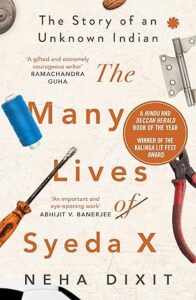
If The Day I Became a Runner interests you, these related reviews may help you explore women’s lives, ambition, public space, and social barriers further. Lady Doctors looks at women who entered medicine against great odds, while The Many Lives of Syeda X turns toward women’s labour and invisibility in everyday India. You may also find my broader lists of books by Indian women writers in English and books by women writers useful for discovering more such voices.

About the reviewer
Manoj Payal
Manoj is an avid reader and a writer in progress, with interests spanning literature, history, politics, and the social sciences. His writing across book reviews, essays, articles, and poetry—explores ideas, society, and the human experience.He has spent over two decades working in the IT industry, a background that informs his analytical approach to reading and writing.