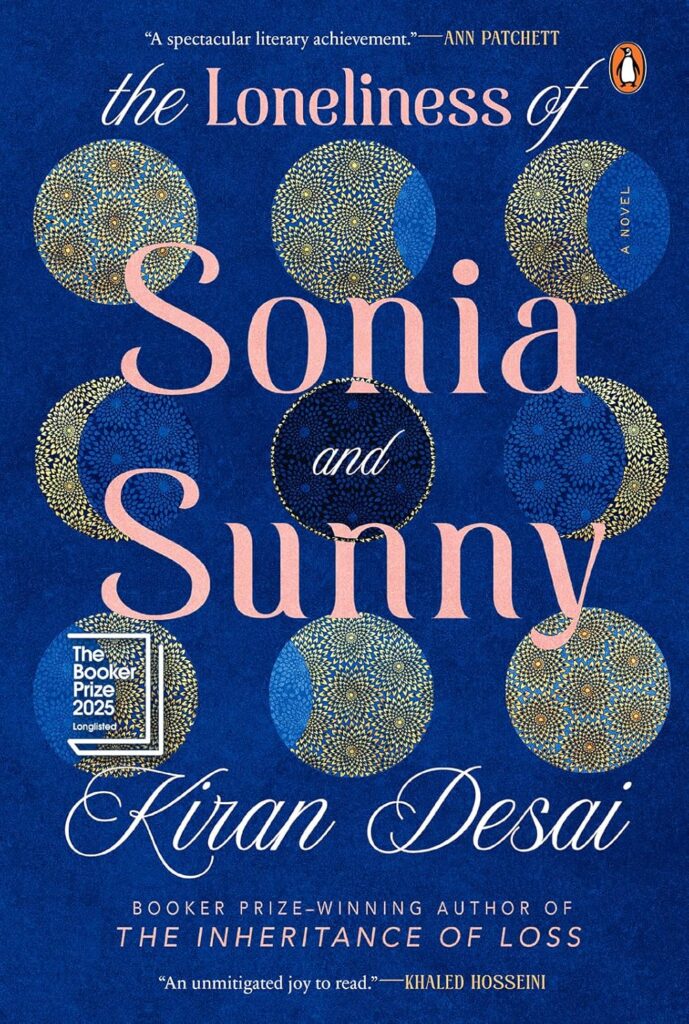
The Loneliness of Sonia and Sunny by Kiran Desai is a literary novel about loneliness, love, family expectations, migration, class, and belonging. Moving between India, America, Mexico, and Italy, the novel follows Sonia and Sunny while also exploring the lives of their families and the emotional distance carried by people across generations. This review looks at what works in the novel, what felt too lengthy, and who may enjoy this kind of literary fiction.
Book: The Loneliness of Sonia and Sunny
Author: Kiran Desai
Form: Literary fiction / novel
Subject: Love, loneliness, family, migration, and belonging
Main themes: loneliness, arranged marriage, family expectations, migration, class, love, identity, literary realism, and India-America lives
Best for: Readers interested in literary fiction, Indian writing in English, family novels, migration stories, and slow, descriptive novels
Why I Picked The Loneliness of Sonia and Sunny
I picked up The Loneliness of Sonia and Sunny because I was curious to read Kiran Desai after many years, especially after The Inheritance of Loss. The title itself interested me because loneliness is not always about being alone. Sometimes it is also about family, distance, memory, expectations, and the inability to be understood by people around us.
About The Loneliness of Sonia and Sunny
Two young people are living far away from their country while studying in America. Sonia tells her parents that she is feeling lonely, and the news reaches her grandparents living in Allahabad. The only remedy her grandparents can think of for loneliness is to find a suitable boy and get Sonia married. Her grandfather, a lawyer, reaches out to his neighbour and chess buddy, a Colonel, whose grandson Sunny is also living in America and is apparently lonely. The two families decide to arrange a match between them. Sonia’s parents and grandparents are unaware that she is romantically involved with a much older painter.
The matchmaking does not work out, but they unexpectedly meet in India when Sunny returns to visit his family and Sonia comes back after her visa is not approved. As opposed to the title, the book captures the loneliness of everybody — Sonia and Sunny’s parents, grandparents, Sonia’s aunt, and in some ways even the house helps. More than external loneliness, the author captures internal loneliness: what you do, how you feel, and how you react when you are alone.
Sunny gets a job with the Associated Press in New York, while Sonia tries her hand at writing and plans to write a book. The novel further explores their relationship with each other, their families, and their former lovers. Through the book, you travel across parts of India, America, Mexico, and Italy, and through these journeys the story moves forward. I also liked how the story moves through important historical moments, such as the aftermath of 9/11, along with the political and social atmosphere of India in the late 1990s and early 2000s, which made the timeline feel more real and relatable.
Writing Style
I liked the storytelling, the characters, and the way the story progresses. However, there was too much description for me. Whether it is a place, an object, or even food, I understand that these details add to the story and its flow, but at many points they slowed the pace of the novel.
Another thing I felt was that many of these references seemed connected to an upper-middle-class world. Although the author is not trying to present them as luxury, some of the material details felt distant and difficult for an average reader to relate to.
The book is very well written, but the detailed descriptions made it feel lengthy. In my view, the novel could have been shorter. This may also be because I primarily read non-fiction, especially books on history, politics, and socio-economic subjects. It is not that non-fiction books are necessarily shorter, but they often move more directly from one idea or event to another.
Readers who enjoy literary fiction, especially slow and detailed literary realism, may appreciate this style more than I did.
Who Should Read The Loneliness of Sonia and Sunny
Readers who enjoy literary fiction, especially literary realism, will appreciate this novel. It is also a good fit for readers interested in family stories, migration, loneliness, love, class, and Indian writing in English.
Readers who prefer fast-moving plots may find the pace slow, especially because the novel spends a lot of time on description, places, objects, food, and the inner worlds of its characters.
Our Verdict
The Loneliness of Sonia and Sunny is a well-written and layered novel about love, family, loneliness, and belonging. What worked for me was the way Kiran Desai shows that loneliness is not limited to Sonia and Sunny alone. It appears across generations, across countries, and even within families.
At the same time, the novel felt too descriptive and lengthy for me. Readers who enjoy slow, detailed literary fiction may appreciate this quality more than I did. For me, the book was engaging in parts, but the pace often slowed because of its many descriptions.
About the Author
Kiran Desai is an award-winning Indian-born American author best known for her internationally acclaimed novels that explore postcolonialism, globalization, and immigrant experiences . She made literary history by winning the prestigious Booker Prize in 2006 for her second novel, The Inheritance of Loss
Related Readings
If The Loneliness of Sonia and Sunny interests you, these related reviews may help you explore literary fiction that looks closely at loneliness, memory, society, and inner life. Delhi: A Soliloquy moves through personal and political memories of a city, while The Vegetarian explores alienation, family, the body, and quiet rebellion in a very different cultural setting. Together, they extend the conversation around how individuals struggle to belong within families, cities, and social expectations.


About the reviewer

Manoj Payal
Manoj is an avid reader and a writer in progress, with interests spanning literature, history, politics, and the social sciences. His writing across book reviews, essays, articles, and poetry—explores ideas, society, and the human experience.He has spent over two decades working in the IT industry, a background that informs his analytical approach to reading and writing.